



What's Happening?
Tadashi Kawamata, a Japanese artist known for his temporary installations, recently showcased a dynamic sculpture at the Palais de Tokyo in Paris. The installation, named 'Tornado', was composed of 5,000 pieces of wood and was part of a series supported
by Ruinart, a French champagne house. Kawamata's work is characterized by its use of simple materials to create monumental structures that are both impressive and inviting. His approach to art emphasizes the transient nature of his creations, drawing inspiration from the natural world where nothing lasts forever. Kawamata's installations often interact with their architectural surroundings, creating a dialogue between the static nature of buildings and the fluidity of his art.
Why It's Important?
Kawamata's work challenges traditional notions of art by embracing impermanence and the use of found materials. This approach not only highlights the beauty in simplicity but also encourages a sustainable practice by recycling materials. His installations provoke thought about the relationship between art and environment, urging viewers to consider the temporary nature of both. In a broader context, Kawamata's art reflects a shift towards more environmentally conscious and ephemeral art forms, which could influence future artistic practices and public art installations. This perspective aligns with growing global awareness of sustainability and the need to reduce waste.
What's Next?
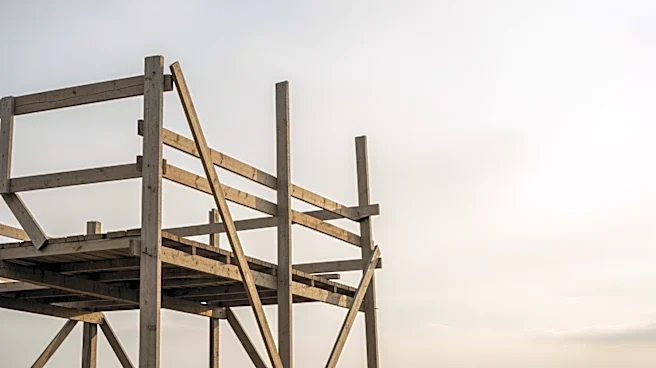
Following the exhibition at the Palais de Tokyo, the materials from 'Tornado' will be repurposed for new installations at Ruinart's sculpture park in Reims. Kawamata plans to construct three large-scale works, including an 8-meter-high observation tower inspired by the champagne cellars' architecture. These installations will continue to explore themes of impermanence and interaction with the environment. Additionally, Kawamata will create ephemeral works for events such as Berlin Gallery Weekend and Art Basel in Miami Beach, further expanding his influence and the reach of his artistic philosophy.
Beyond the Headlines
Kawamata's work raises questions about the role of art in society and its potential to foster community engagement. His installations often become part of their environment, inviting interaction and sometimes even becoming habitats for wildlife. This blurring of boundaries between art and nature challenges viewers to reconsider their perceptions of both. Moreover, Kawamata's practice of using found materials speaks to a broader cultural movement towards valuing sustainability and resourcefulness, which could inspire other artists and industries to adopt similar practices.