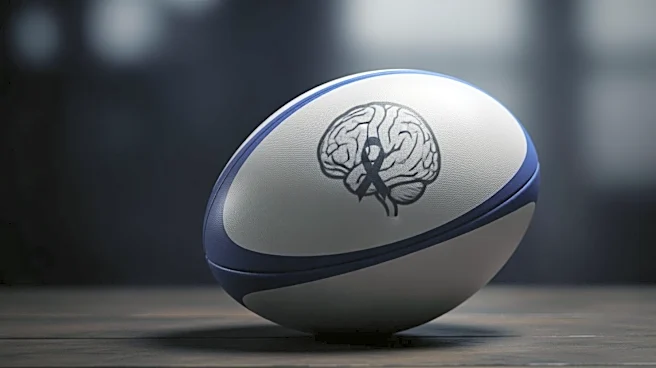




What's Happening?
A post-mortem examination has revealed that Shane Christie, a former New Zealand professional rugby player who died by suspected suicide, had advanced chronic traumatic encephalopathy (CTE). The diagnosis was announced by Coroner Ian Telford during a preliminary
hearing into Christie's death. CTE is a brain abnormality linked to repeated concussions and is known to cause mood swings, impulsive behavior, and depression. Christie, who retired from rugby in 2018 due to concussion effects, was a former New Zealand Maori representative and had campaigned for greater understanding of CTE. His diagnosis follows the death of his friend and fellow rugby player Billy Guyton, also by suspected suicide. The coroner's findings have been confirmed by Dr. Clinton Turner from the University of Auckland's brain bank, where Christie had donated his brain.
Why It's Important?
The confirmation of CTE in Shane Christie's case highlights the ongoing concerns about the long-term effects of repeated head impacts in contact sports like rugby. This diagnosis adds to the growing body of evidence linking CTE to sports-related concussions, which has also been observed in the National Football League and other sports. The findings underscore the need for increased awareness and research into CTE, as well as the implementation of safety measures to protect athletes. New Zealand Rugby has acknowledged the association between head impacts and CTE, emphasizing the importance of ongoing research to understand and mitigate these risks.
What's Next?
The coroner's investigation into the cause of Christie's death will continue, potentially influencing future policies and safety protocols in rugby and other contact sports. The rugby community and sports organizations may face increased pressure to address the risks of concussions and implement more stringent safety measures. Additionally, the findings could lead to further research into CTE and its impact on athletes, potentially resulting in changes to training and gameplay to reduce head injuries.