


What's Happening?
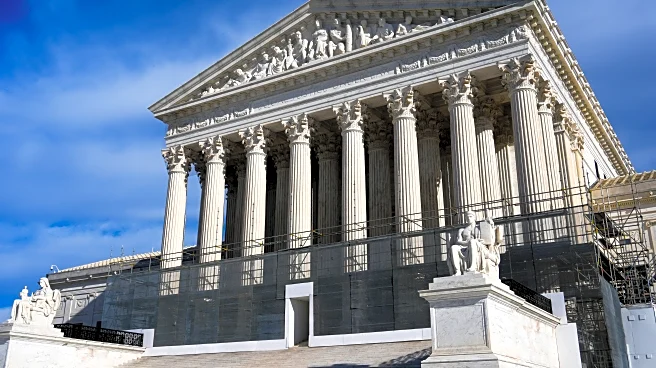
The Supreme Court recently ruled in a 6-3 decision that President Trump's tariffs, a significant component of his economic policy, were unconstitutional. This decision has led to concerns among traders about the demand for U.S. agricultural products,
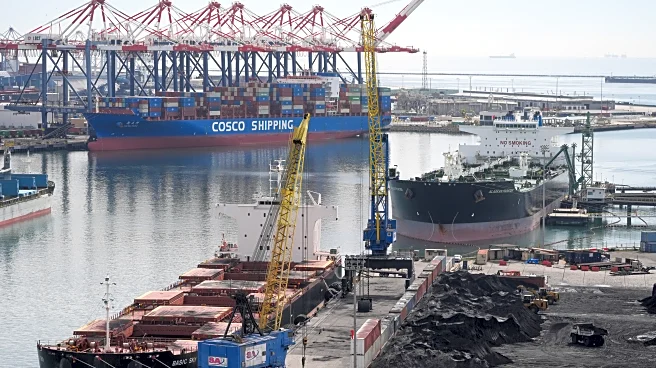
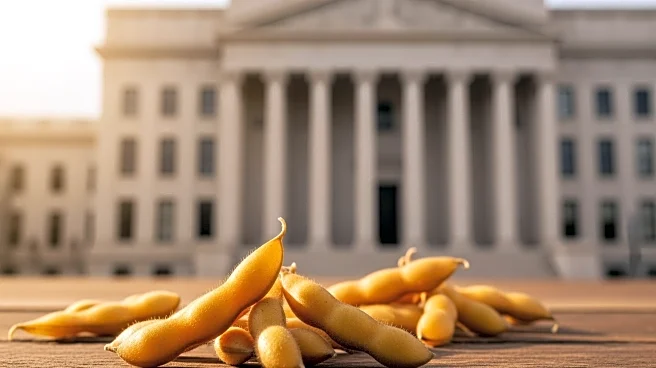
particularly soybeans and grains. President Trump had previously announced that China, under President Xi Jinping, would purchase an additional 8 million metric tons of U.S. soybeans, supplementing the 12 million metric tons already agreed upon for the year. However, following the court's ruling, there is apprehension that China may not fulfill this commitment. Despite these concerns, U.S. Trade Representative Jamieson Greer assured that trade deals are not contingent on the tariffs and emphasized the strong relationship between President Trump and President Xi. The uncertainty has affected futures trading, with soybean futures for May delivery dropping overnight.
Why It's Important?
The Supreme Court's decision to declare the tariffs unconstitutional could have significant implications for U.S. agricultural exports, particularly soybeans, which are a major export to China. The potential withdrawal of China's commitment to purchase additional soybeans could impact U.S. farmers and the agricultural sector, which relies heavily on exports. This development also highlights the broader economic and diplomatic challenges in U.S.-China trade relations. The ruling may lead to a reevaluation of trade strategies and policies, affecting stakeholders across the agricultural supply chain, from farmers to exporters. The situation underscores the interconnectedness of legal decisions, international trade agreements, and economic policies.
What's Next?
In the wake of the Supreme Court ruling, stakeholders in the agricultural sector will be closely monitoring China's response and any potential adjustments in trade agreements. The U.S. government may need to engage in diplomatic discussions to ensure that trade commitments are honored despite the legal changes. Additionally, there may be increased pressure on policymakers to develop alternative strategies to support the agricultural industry and mitigate potential economic impacts. The situation could also prompt discussions on the future of trade policies and the role of tariffs in international commerce.