




What's Happening?
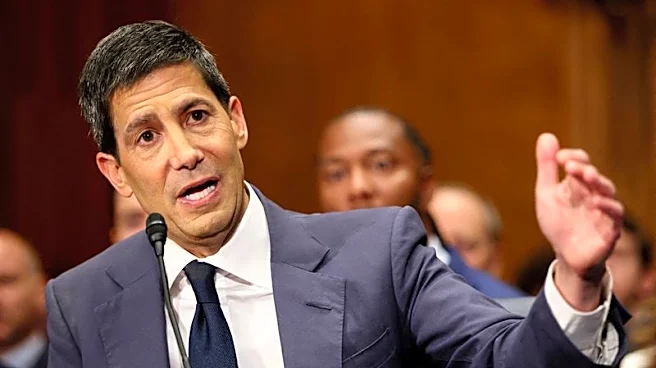
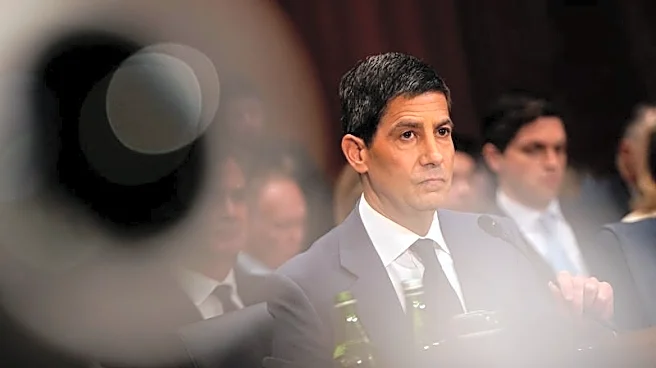
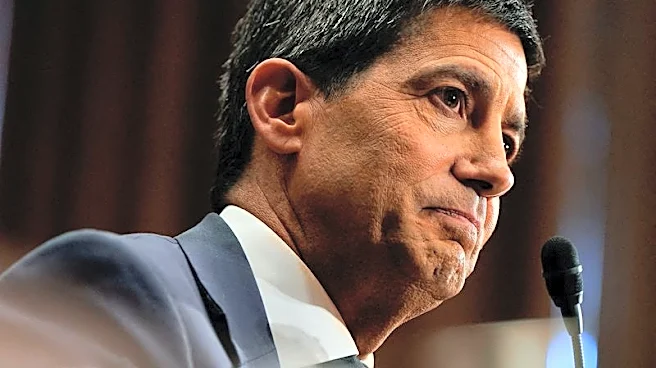
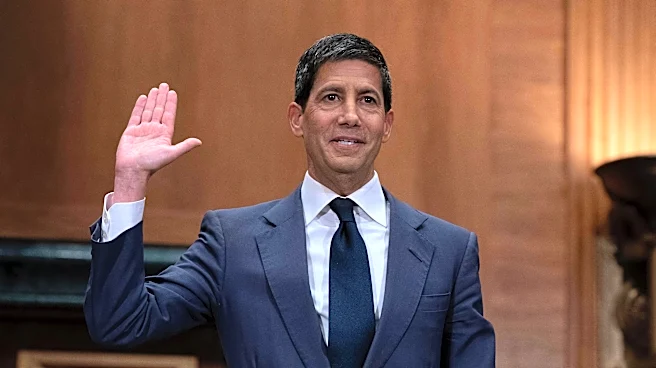
Kevin Warsh has been confirmed as the new chair of the Federal Reserve following a closely contested Senate vote of 54-45. This marks one of the most divisive confirmations for a Fed chair in modern history. Warsh, who previously served on the Fed's Board
of Governors, will replace Jerome Powell, whose term is set to expire. President Trump has been vocal about his expectations for Warsh to lower interest rates, a stance that has been a point of contention with outgoing Chair Powell. Warsh's confirmation concludes a lengthy search process that began in the summer of 2025, with Warsh emerging as the preferred candidate among nearly a dozen contenders.
Why It's Important?
The confirmation of Kevin Warsh as the Federal Reserve chair is significant due to the potential shift in monetary policy direction under his leadership. President Trump has expressed a desire for lower interest rates, which could influence Warsh's policy decisions. This change in leadership comes at a time when the U.S. economy is facing challenges such as rising inflation and a complex job market. Warsh's approach to monetary policy, particularly his views on interest rates and the Fed's balance sheet, will be closely watched by economic stakeholders. His leadership could impact financial markets, borrowing costs, and overall economic stability.
What's Next?
As the new chair, Warsh is expected to navigate the Federal Reserve through a period of economic uncertainty. He will need to build consensus within the Federal Open Market Committee, which is currently divided on the best path forward for interest rates. Warsh's focus on AI-driven productivity gains and a new inflation framework suggests he may adopt a more flexible approach to temporary price shocks. His tenure will likely involve efforts to reform the Fed's communication style and balance sheet management. The financial community will be attentive to how Warsh's policies align with or diverge from those of his predecessor, Jerome Powell.