







What's Happening?
During the TV upfronts in New York City, marketers are emphasizing the need for improved measurement and flexibility in advertising deals. Alyson Griffin from State Farm highlighted the shift towards transparency and performance accountability in TV advertising.
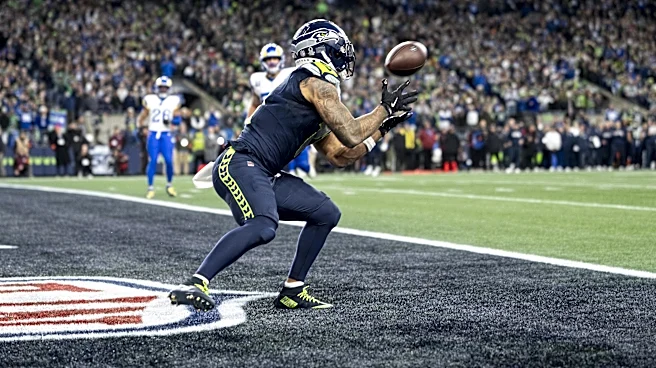
Marketers are increasingly focused on tying TV spending to business outcomes, with 45% prioritizing business results in media buying decisions. However, measuring these outcomes remains a challenge, as noted by Vicky Chang from Tatari. In response, OpenAP, an adtech company, is launching a standard to connect TV campaign data with advertiser data to better track user actions. Additionally, sports programming remains a key focus for marketers, with the NFL being a major draw. Marketers are exploring ways to extend their sports ad budgets beyond traditional commercials, including social media integrations and dynamic ad insertions.
Why It's Important?
The demand for better measurement and flexibility in TV advertising reflects broader industry trends towards accountability and efficiency. As marketers seek to maximize their return on investment, the ability to accurately measure business outcomes becomes crucial. This shift could lead to more data-driven advertising strategies and potentially reshape how TV networks structure their deals. The emphasis on sports programming underscores its continued importance as one of the few remaining mass-reach TV vehicles. This focus could drive innovation in advertising formats and integrations, offering new opportunities for brands to engage with audiences. The call for flexibility in deal structures also highlights the uncertainty in the current geopolitical and economic environment, prompting advertisers to seek adaptable strategies.
What's Next?
As the industry adapts to these demands, TV networks and advertisers may collaborate more closely to develop standardized measurement tools and flexible deal structures. The success of OpenAP's new standard could set a precedent for future data integration efforts, potentially leading to more precise targeting and performance tracking. Marketers will likely continue to explore innovative advertising formats, particularly in sports programming, to enhance audience engagement. The ongoing geopolitical and economic uncertainties may further influence advertising strategies, with brands seeking to remain agile in their media investments. This evolving landscape could drive significant changes in how TV advertising is planned and executed in the coming years.