


What's Happening?
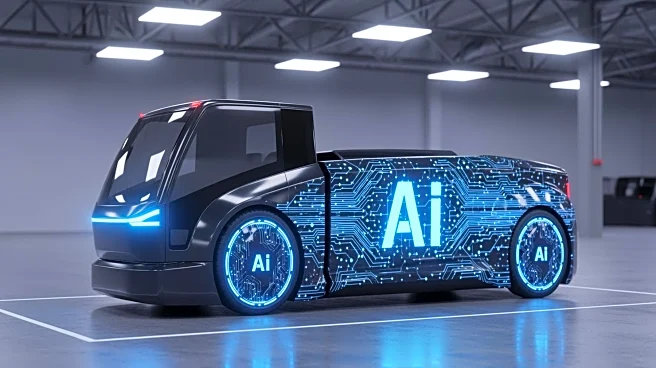
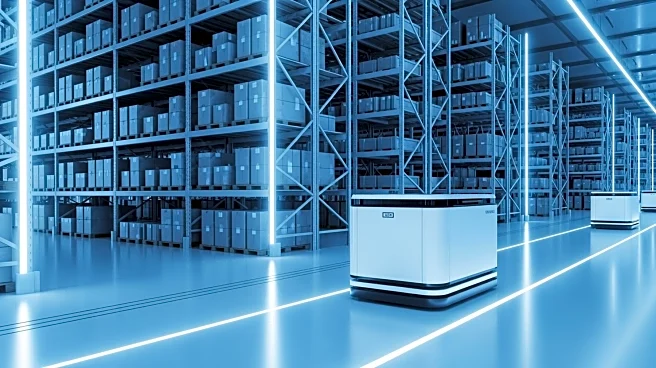
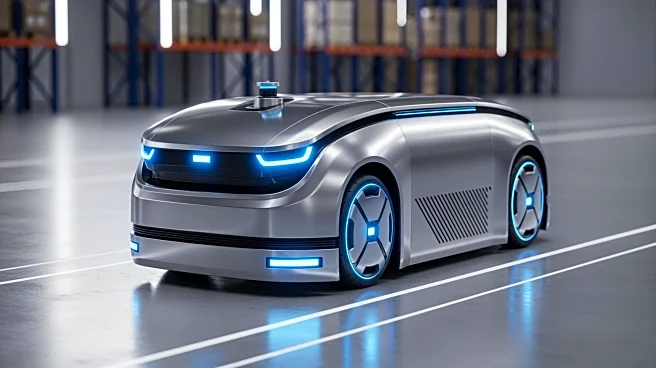
Alstef Group, a company specializing in automation solutions for airports, intralogistics, and parcel markets, has unveiled a new autonomous industrial vehicle equipped with AI-based perception capabilities. This vehicle is designed for dynamic warehouse
and distribution environments where operations are shared between humans and machines. The system features a 'perception bubble,' which is a continuously updated awareness zone that allows the vehicle to interpret and respond to its surroundings in real time. It uses onboard cameras and AI models to classify objects, such as pedestrians and pallets, and adjust its behavior accordingly. The vehicle can adapt to layout changes and temporary obstacles, and it can modify its docking trajectory based on pallet position. The perception system is available in two configurations: a front-and-rear 'light' version and a full 360-degree version, with the initial rollout focusing on the lighter configuration. Future capabilities will be introduced through software updates.
Why It's Important?
The introduction of AI-powered autonomous vehicles by Alstef Group represents a significant advancement in warehouse automation. This technology could lead to increased efficiency and safety in warehouse operations by reducing the need for precise placement or fixed guidance systems. The ability of the vehicle to adapt to changing environments and recognize features such as pedestrian crossings enhances its utility in existing facilities without requiring major infrastructure changes. This development could potentially lower operational costs and improve productivity for businesses in the logistics sector. As companies continue to seek ways to optimize their supply chains, the adoption of such advanced technologies could provide a competitive edge.
What's Next?
Alstef Group plans to showcase this new autonomous vehicle at LogiMAT 2026 in Stuttgart, indicating a strategic move to capture market interest and expand its customer base. The company is likely to focus on further developing the vehicle's capabilities through software updates, which could include enhanced perception and navigation features. As the logistics industry increasingly embraces automation, other companies may follow suit, leading to broader adoption of AI-driven solutions. Stakeholders in the logistics and intralogistics sectors will be watching closely to see how this technology performs in real-world applications and its impact on operational efficiency.