







What's Happening?
The United States and Mexico have initiated new rounds of negotiations concerning the United States-Mexico-Canada Agreement (USMCA) as the July 1, 2026, joint review deadline approaches. The Office of the United States Trade Representative (USTR) announced
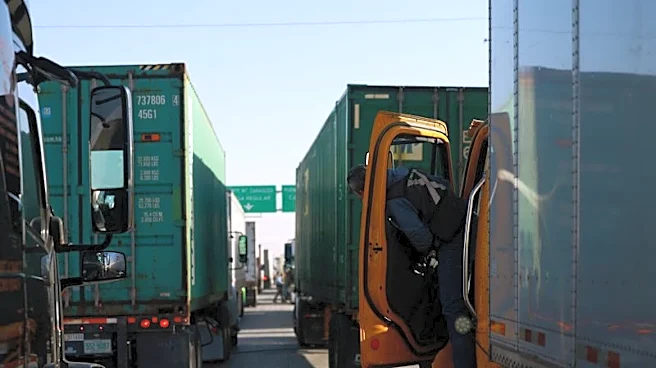
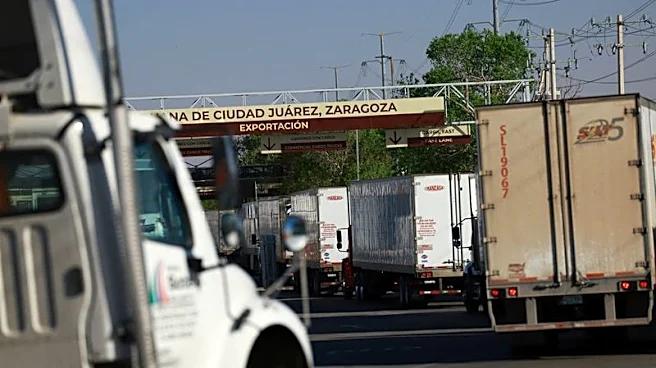
that Deputy United States Trade Representative Ambassador Jeff Goettman will lead a U.S. delegation to Mexico City for the first round of bilateral negotiations on May 28 and 29. These discussions will focus on economic security and rules of origin for key industrial goods. Subsequent rounds are scheduled for June 16-17 in Washington, D.C., and July 20 in Mexico City, covering topics such as agriculture and ensuring a level playing field. The USMCA, which replaced the North American Free Trade Agreement (NAFTA) in 2020, aims to benefit U.S. manufacturers, farmers, and businesses by including stronger environmental and labor regulations and incentivizing domestic production.
Why It's Important?
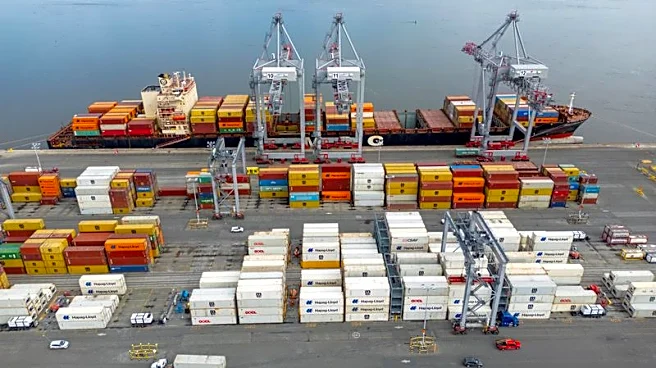
The ongoing negotiations are crucial for maintaining and potentially enhancing the economic relationships between the U.S., Mexico, and Canada. The USMCA is designed to protect American jobs and industries by including provisions for intellectual property protections and stricter labor and environmental standards. These negotiations could impact various sectors, including automotive manufacturing, which relies heavily on cross-border trade. The outcome of these talks may influence the competitive landscape for U.S. businesses and affect tariffs on goods that do not meet USMCA origin rules. The discussions also reflect broader geopolitical dynamics, as the U.S. seeks to address trade imbalances and intellectual property concerns, particularly in light of tensions with countries like China.
What's Next?
As the negotiations progress, stakeholders from various industries will be closely monitoring the outcomes, especially those in sectors heavily reliant on North American trade. The USTR has initiated a public consultation process to gather input on the USMCA's operation and implementation, which will inform the U.S. position in the joint review. The potential for the U.S. to walk away from the agreement and pursue bilateral deals with Mexico and Canada adds a layer of uncertainty. The negotiations are expected to be vigorous, with each country leveraging its strengths to secure favorable terms. The automotive industry, in particular, could face significant disruptions if the current trade framework is altered.