






What's Happening?
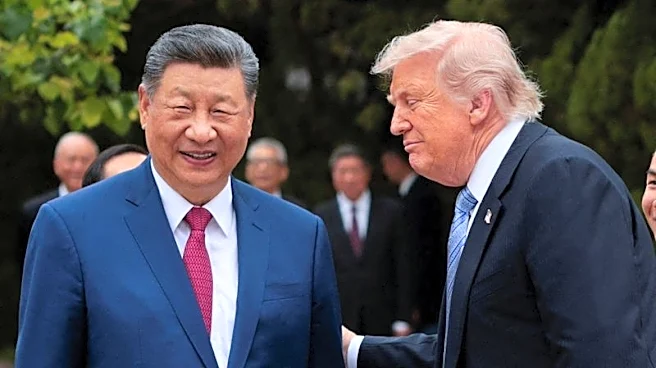
Following a significant trade agreement between the U.S. and China, the latter has pledged to purchase at least $17 billion worth of U.S. agricultural products annually through 2028. This development, confirmed by the White House, is expected to provide
a substantial revenue boost for U.S. farms. The agreement builds on a previous commitment from October 2025, where China agreed to purchase 25 million metric tons of American soybeans annually over three years. The new deal not only reinforces the soybean trade but also diversifies the U.S. agricultural export basket to include other essential crops, although specific names have not been disclosed. Additionally, China will resume purchasing U.S. beef and poultry. This agreement comes after years of trade tensions and retaliatory tariffs that have affected U.S. agricultural exports to China.
Why It's Important?
The $17 billion annual commitment from China is a significant win for the U.S. agricultural sector, which has faced challenges due to trade tensions and shifting sourcing patterns. In 2022, U.S. agricultural exports to China reached a record $40.9 billion, but this figure declined as trade relations soured. The new agreement is expected to stabilize farm incomes, encourage planting, and benefit companies across the agricultural value chain. It also positions exchange-traded funds (ETFs) focused on agribusiness and commodities for potential gains. The deal underscores China's role as a critical export market for U.S. agriculture and highlights the importance of maintaining stable trade relations.
What's Next?
The agreement is likely to catalyze growth in the U.S. agricultural industry, particularly from 2026 to 2028. However, full diversification towards other trade partners will take time, and future U.S. policy changes could reintroduce volatility. Investors may look to capitalize on this development through agricultural ETFs, which offer exposure to U.S. farms and commodity prices. The Invesco DB Agriculture ETF, Invesco Agriculture Commodity Strategy No K-1 ETF, Teucrium Soybean ETF, and Teucrium Agricultural ETF are among those poised to benefit from the increased trade activity.