
What's Happening?
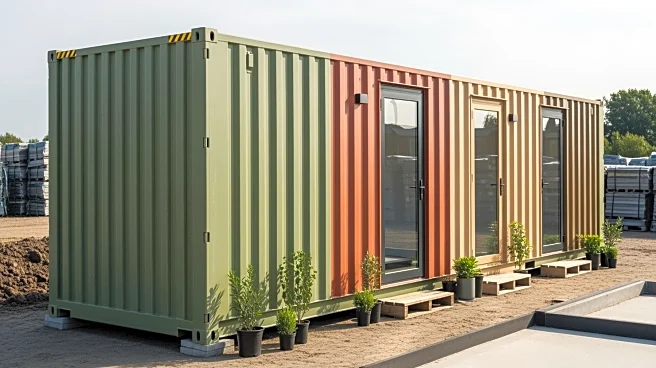
The use of shipping containers is gaining traction as a sustainable solution for job sites across various industries. Traditionally used for transporting goods, these steel structures are now being repurposed
as offices, storage units, workshops, and break areas on eco-conscious job sites. This approach aligns with the principles of the circular economy by extending the life of containers beyond their original purpose. By reusing shipping containers, companies can significantly reduce waste, resource consumption, and the need for new materials. The durability of these containers, made from weather-resistant steel, allows them to withstand harsh conditions and frequent relocations, minimizing the need for repairs and replacements. Additionally, shipping containers offer logistical advantages, as they are designed for easy transport and can be efficiently moved between sites.
Why It's Important?
The repurposing of shipping containers for job sites represents a significant step towards more sustainable field operations. This practice not only reduces the environmental footprint of construction and other projects but also supports cost savings. By avoiding the need to manufacture new temporary structures, companies can lower their emissions and resource use. The adaptability of shipping containers allows them to serve multiple functions over their lifespan, reducing the total number of structures needed and minimizing land disturbance. Furthermore, the integration of energy-efficient upgrades, such as insulation and solar panels, enhances the sustainability of these setups by reducing energy consumption and reliance on fossil fuels. This shift towards greener job sites reflects a growing expectation for sustainability in industry practices.
What's Next?
As the demand for sustainable practices continues to rise, the use of shipping containers in job sites is likely to expand. Companies may increasingly adopt this approach to meet environmental goals and regulatory requirements. The flexibility and cost-effectiveness of container-based setups could encourage broader adoption across sectors such as construction, renewable energy, and infrastructure. Future developments may include advancements in container modification techniques and the integration of more sophisticated energy systems. Stakeholders, including industry leaders and policymakers, may also explore incentives to promote the use of sustainable materials and practices in field operations.
Beyond the Headlines
The shift towards using shipping containers for job sites highlights a broader trend of adaptive reuse in the construction and logistics industries. This practice not only addresses environmental concerns but also challenges traditional notions of temporary structures. By prioritizing durability and reusability, companies can create more resilient and efficient work environments. The cultural shift towards sustainability may also influence consumer expectations and corporate responsibility, driving further innovation in eco-friendly solutions. As industries continue to evolve, the integration of sustainable practices could become a standard rather than an exception.