
What's Happening?
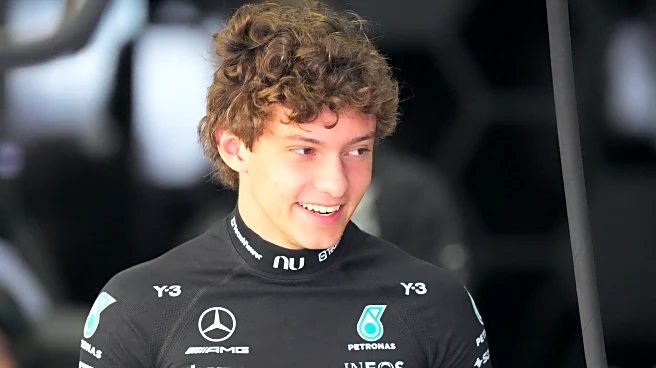
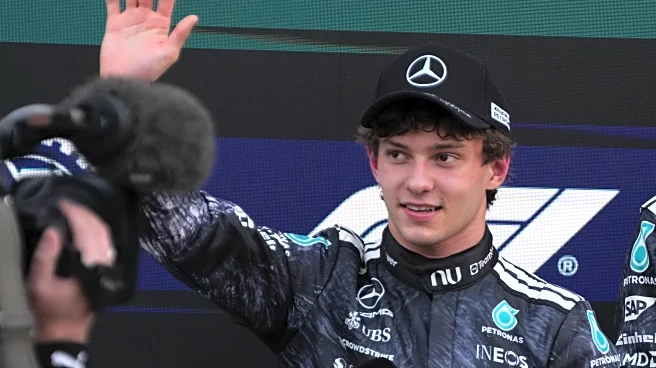
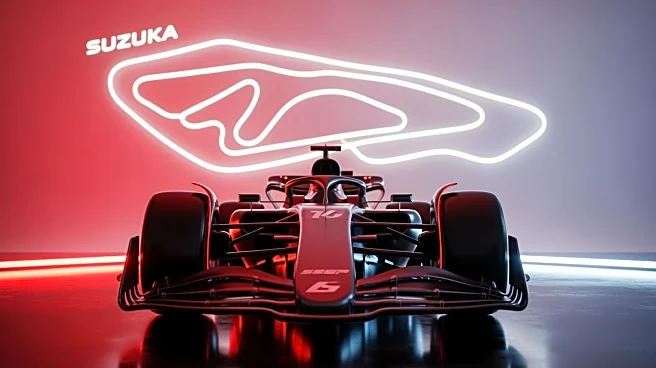
Kimi Antonelli secured victory at the Japanese Grand Prix, becoming the youngest leader in the Formula 1 championship. The 19-year-old Italian driver benefited from a safety-car period following a crash by Oliver Bearman, which allowed him to make a pit
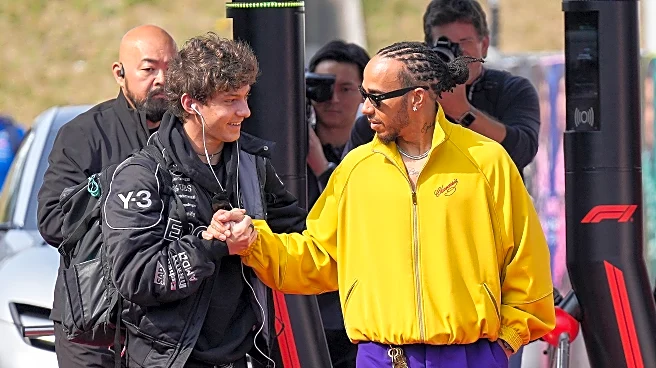
stop with less time lost compared to his competitors. Antonelli's win was facilitated by the timing of the safety car, which disrupted the strategies of rivals Oscar Piastri and George Russell. Piastri, who had initially taken the lead, finished second, marking McLaren's first podium of the 2026 season. Russell, who had been in contention for the win, ended the race in fourth place behind Ferrari's Charles Leclerc. The race also saw Lewis Hamilton and Lando Norris battling for fifth place, with Norris eventually securing the position. The event was notable for Aston Martin, as Fernando Alonso completed the race, finishing 18th.
Why It's Important?
Antonelli's victory at Suzuka is significant as it marks a shift in the competitive landscape of Formula 1, with a young driver taking the lead in the championship. This win highlights the potential for new talent to challenge established drivers and teams, potentially altering team strategies and sponsorship dynamics. For McLaren, Piastri's second-place finish provides a much-needed boost after a challenging start to the season, indicating possible improvements in their performance. The race results also impact the constructors' championship standings, influencing team decisions and resource allocations for upcoming races. The unexpected outcome due to the safety car period underscores the unpredictable nature of motorsport, where strategic decisions can be dramatically affected by unforeseen events.
What's Next?
The Formula 1 calendar now faces a five-week break due to the cancellation of races in Bahrain and Saudi Arabia, caused by conflict in the Middle East. The next race will be the Miami Grand Prix, scheduled for May 1-3, marking the first of three U.S. events this year. Teams will use this break to reassess strategies and make necessary adjustments to their cars and race plans. The extended pause may also provide opportunities for drivers to regroup and prepare for the upcoming races, potentially influencing the championship standings as the season progresses.