








What's Happening?
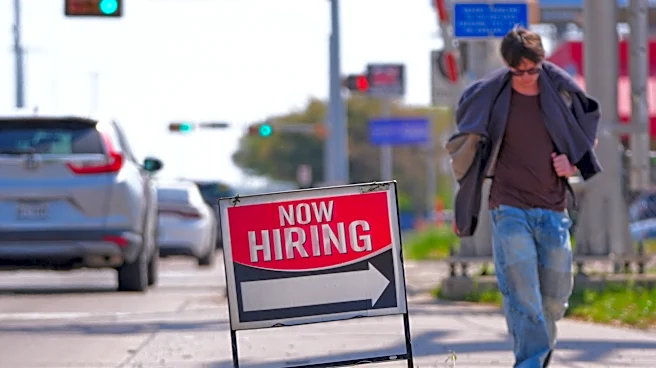
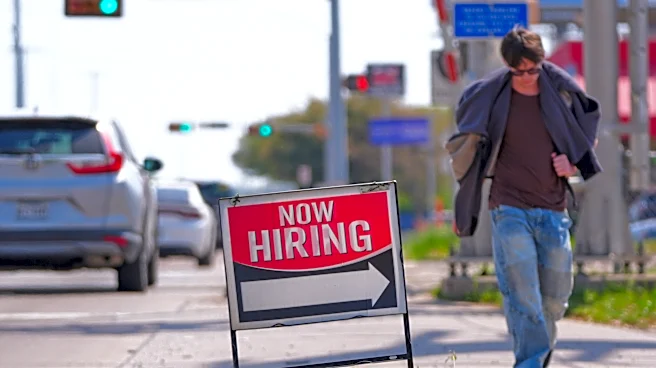
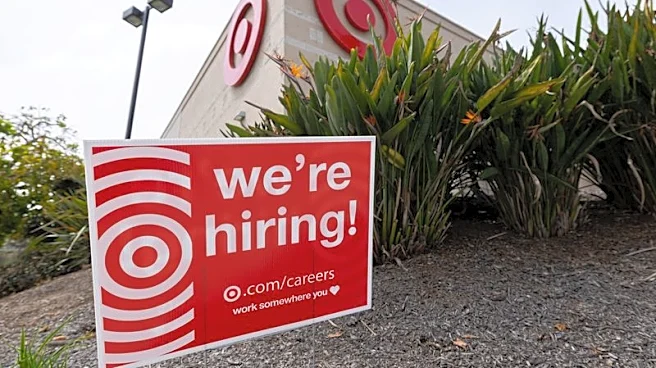
The U.S. job market saw a significant rebound in March, adding 178,000 jobs, according to the Bureau of Labor Statistics. This increase follows a revised loss of 133,000 jobs in February. The return of approximately 31,000 striking Kaiser Permanente healthcare
workers contributed to the job growth. Despite the positive job numbers, concerns persist among new college graduates about the impact of AI on entry-level positions. A report by Challenger, Gray & Christmas revealed that U.S. employers announced 60,620 layoffs in March, with AI adoption cited as a primary reason for a quarter of these cuts. The unemployment rate decreased slightly to 4.3% in March from 4.4% in February.
Why It's Important?
The rebound in job numbers is a positive sign for the U.S. economy, indicating resilience despite challenges such as AI-driven layoffs. For new college graduates, the job market remains challenging, with many expressing concerns about job security and the potential for AI to replace entry-level roles. The unemployment rate for recent graduates aged 22 to 27 increased to 5.7% in the fourth quarter of 2025, highlighting the difficulties faced by young job seekers. The broader economic implications include potential shifts in hiring practices, with employers focusing more on quality and immediate value from new hires.
What's Next?
As the job market continues to evolve, new graduates may need to adapt by acquiring skills that align with technological advancements, particularly in AI. Federal Reserve Chair Jerome Powell has advised students to master new technologies to improve their job prospects. The ongoing impact of AI on employment and the potential effects of geopolitical events, such as the Iran conflict, on energy prices and hiring practices, will be closely monitored by economic stakeholders.