

What's Happening?
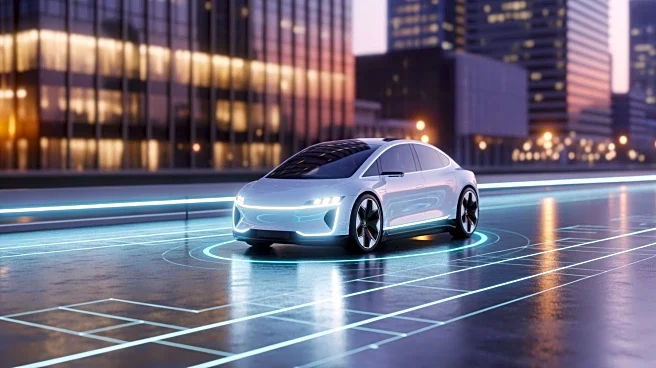
Elon Musk's recent statements regarding Tesla's self-driving capabilities have sparked debate, particularly after a significant prediction miss. In July 2025, Musk claimed that Tesla's Robotaxi network would cover half of the U.S. population by the end of the year. However, this goal was not achieved, with coverage remaining at zero percent. Musk's comments have often been met with skepticism, especially his assertion that 10 billion miles of training data are necessary for safe unsupervised self-driving. Tesla has logged nearly 7.3 billion miles as of late 2025, but the timeline to reach the 10 billion mark remains uncertain. Musk's predictions have been criticized for their optimism, with some questioning the statistical basis of his claims.
Why It's Important?
The scrutiny of Musk's predictions highlights the challenges and complexities in achieving fully autonomous driving. Tesla's progress in self-driving technology is closely watched by investors and the automotive industry, as it could revolutionize transportation and impact regulatory frameworks. The missed targets may affect investor confidence and raise questions about the feasibility of Musk's ambitious timelines. Additionally, the debate over the required data for safe autonomous driving underscores the broader industry's struggle to balance innovation with safety and reliability. The outcome of Tesla's self-driving efforts could influence the competitive landscape and regulatory approaches to autonomous vehicles.
What's Next?
Tesla is expected to continue its efforts to reach the 10 billion mile milestone, which Musk suggests is crucial for achieving unsupervised self-driving. The company may face increased pressure to demonstrate tangible progress and address safety concerns. Regulatory bodies and industry stakeholders will likely monitor Tesla's advancements closely, as the implications for public safety and transportation infrastructure are significant. The ongoing development of self-driving technology by competitors like NVIDIA and Waymo adds another layer of complexity, as Tesla must navigate both technological and market challenges to maintain its leadership in the field.
Beyond the Headlines
Musk's predictions and the subsequent scrutiny reflect broader issues in the tech industry, such as the tension between visionary goals and practical execution. The reliance on vast amounts of data for training autonomous systems raises ethical and privacy concerns, particularly regarding data collection and usage. Furthermore, the potential shift towards autonomous vehicles could have far-reaching effects on employment, urban planning, and environmental policies. As Tesla and other companies push the boundaries of self-driving technology, these developments may prompt discussions about the societal and ethical implications of a future dominated by autonomous transportation.