






What's Happening?
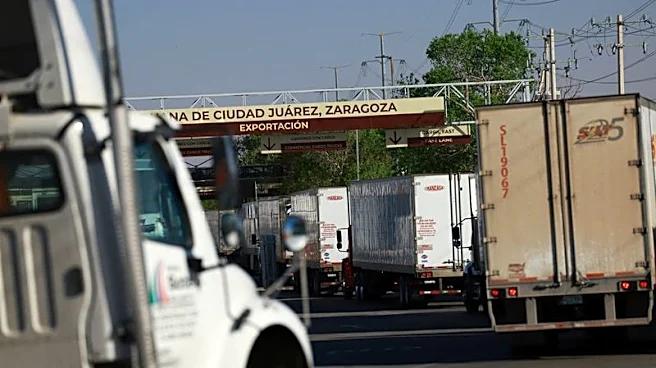
The Office of the United States Trade Representative has announced a series of bilateral negotiating rounds between the United States and Mexico as part of the first Joint Review of the United States-Mexico-Canada Agreement (USMCA). The initial round of negotiations
is scheduled for May 28-29 in Mexico City, led by Deputy United States Trade Representative Ambassador Jeff Goettman. These discussions will focus on economic security and the rules of origin for key industrial goods. A second round is planned for June 16-17 in Washington, D.C., which will include topics such as agriculture and ensuring a level playing field. A third round is set for the week of July 20 in Mexico City. The negotiations aim to ensure that the USMCA continues to benefit U.S. manufacturers, farmers, ranchers, workers, and service suppliers, as well as businesses of all sizes, including small and medium-sized enterprises.
Why It's Important?
The USMCA is a critical trade agreement that replaced the North American Free Trade Agreement (NAFTA) and is designed to enhance trade relations between the U.S., Mexico, and Canada. These negotiations are significant as they aim to address and refine aspects of the agreement to better serve the economic interests of the involved countries. For the U.S., ensuring favorable terms in areas like economic security and agriculture is crucial for maintaining competitive advantages and supporting domestic industries. The outcomes of these negotiations could have substantial impacts on trade policies, affecting a wide range of stakeholders from large corporations to small businesses and individual workers.
What's Next?
As the negotiations progress, stakeholders from various sectors will be closely monitoring the outcomes. Potential adjustments to the USMCA could lead to changes in trade practices and regulations, impacting industries such as manufacturing and agriculture. Political leaders and business groups may respond to the negotiation outcomes, advocating for policies that align with their interests. The results of these discussions could also influence future trade agreements and negotiations with other countries.