
What's Happening?
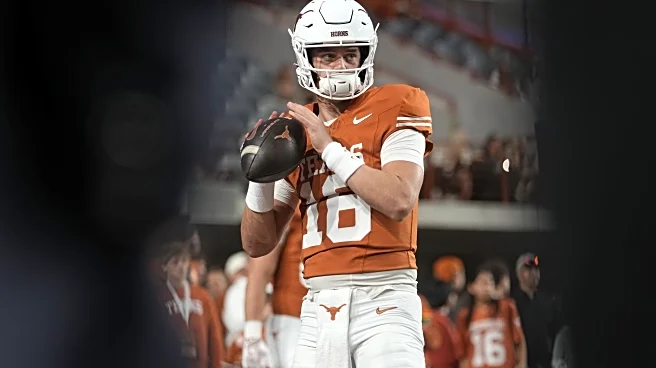
Oregon Ducks quarterback Dante Moore is among the top five college football quarterbacks in terms of name, image, and likeness (NIL) valuation, joining high-profile players like Texas Longhorns' Arch Manning. Moore's NIL valuation is estimated at $3 million,
placing him fifth on the list. The NIL valuations reflect the perceived market value of a player's brand and potential earnings from endorsements and partnerships. Moore's valuation is bolstered by deals with major brands such as Nike and Beats by Dre, as well as partnerships with companies like DoorDash and CVS. Beyond his commercial success, Moore is also known for his commitment to social issues, using his platform to advocate for mental health awareness. He has launched a merchandise shop and authored a children's book, further expanding his personal brand.
Why It's Important?
The rise of NIL valuations underscores a significant shift in college sports, where athletes can now capitalize on their personal brands. This development has implications for the recruitment and retention of top talent in college sports, as players weigh the benefits of staying in college against potential professional earnings. For players like Moore, NIL deals provide a lucrative alternative to entering professional leagues immediately. The focus on social issues by athletes like Moore also highlights the evolving role of athletes as influencers beyond the sports arena, potentially inspiring other players to leverage their platforms for advocacy. This trend could lead to increased visibility and support for various social causes, driven by the influence of high-profile athletes.
What's Next?
As NIL valuations continue to evolve, colleges and universities may need to adapt their strategies to attract and retain top talent. This could involve enhancing support for athletes' branding efforts and providing resources for managing endorsements. The ongoing development of NIL policies and regulations will also play a crucial role in shaping the future landscape of college sports. Stakeholders, including athletic departments and governing bodies, will need to navigate these changes to ensure fair and equitable opportunities for all athletes. Additionally, the impact of athletes' advocacy on social issues may prompt further engagement from sports organizations and sponsors, potentially leading to collaborative initiatives that address societal challenges.
Beyond the Headlines
The emphasis on NIL valuations and athletes' social advocacy reflects broader cultural shifts in how sports figures are perceived and their roles in society. As athletes increasingly engage in social issues, they may influence public discourse and contribute to cultural change. This dynamic also raises questions about the responsibilities of athletes as public figures and the potential impact of their advocacy on their careers and personal lives. The integration of commercial success with social responsibility could redefine the expectations placed on athletes, encouraging a more holistic approach to their public personas.