


What's Happening?
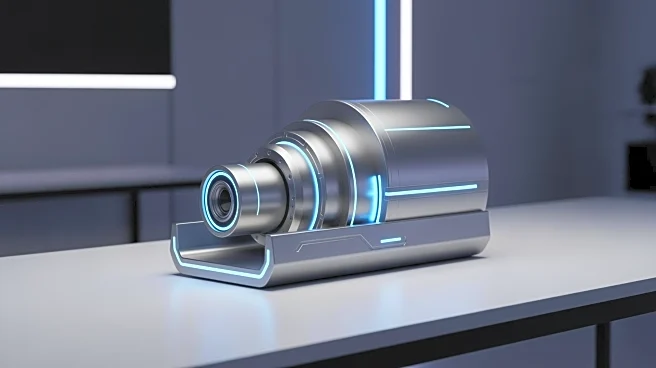
Helio Corporation has announced the successful completion of the prototype assembly for its QuasiStatic Release Mechanism (QSRM), developed under a Phase II Small Business Innovation Research (SBIR) grant from NASA. The QSRM is designed to provide near-zero shock actuation for spacecraft, CubeSats, and large optical systems. This development marks a significant milestone for Helio, as the QSRM will now undergo a series of tests and validations to advance the technology toward commercial readiness. The QSRM aims to improve deployment reliability for sensitive electronics and other shock-sensitive hardware used in flight environments by significantly reducing shock loads during release events. This innovation is expected to lower mission risk,
reduce system-level design constraints, and decrease overall mission costs.
Why It's Important?
The development of the QSRM device is crucial for the aerospace industry as it addresses a long-standing challenge of minimizing shock during mechanical release events. This advancement could lead to more reliable deployment of sensitive equipment in space missions, thereby enhancing mission success rates and reducing costs. The QSRM's potential applicability across civil, commercial, and defense spaceflight systems could lead to widespread adoption, benefiting various stakeholders in the aerospace sector. Additionally, Helio's strategy of leveraging government-backed R&D programs like NASA's SBIR to drive innovation and minimize equity dilution could serve as a model for other companies seeking to advance technology development while maintaining shareholder value.
What's Next?
As the QSRM progresses through testing, Helio plans to evaluate customer adoption opportunities across government and commercial space markets. The company intends to pursue potential strategic collaborations to further integrate the QSRM into various aerospace applications. This could lead to increased market penetration and revenue growth for Helio. The successful commercialization of the QSRM may also encourage further investment in similar technologies, fostering innovation within the aerospace industry.