




What's Happening?
Anita Yokota, a psychologist turned interior designer, has introduced a novel approach to decluttering called the 'holding box' method. This technique is designed to help individuals manage their emotional attachment to items, which often complicates
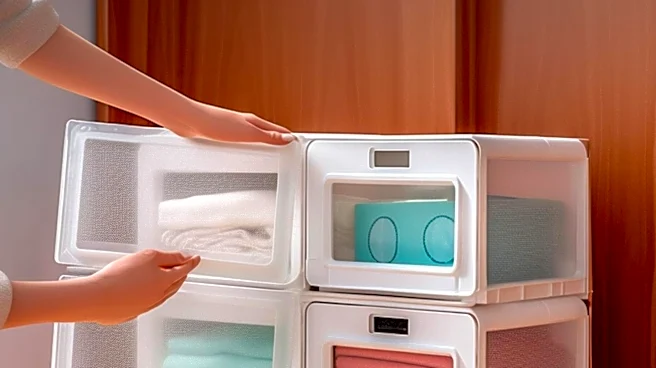
the decluttering process. Yokota suggests placing items that evoke ambivalence into a 'holding box' for a period of 24 to 48 hours. This timeframe allows individuals to process their feelings and make more informed decisions about whether to keep or discard the items. The method aims to create a 'mental container' that helps people confront their emotional ties to possessions, facilitating a clearer decision-making process. Yokota's approach is part of a broader discussion on the impact of clutter on mental health, as explored in the HuffPost podcast 'Am I Doing It Wrong?' hosted by Raj Punjabi-Johnson and Noah Michelson.
Why It's Important?
The 'holding box' method addresses a common challenge in decluttering: the emotional difficulty of parting with items that hold sentimental value. By providing a structured approach to decision-making, this method can help individuals reduce clutter in their living spaces, which is linked to improved mental well-being. Clutter can contribute to stress and anxiety, affecting daily moods and long-term mental health. Yokota's method offers a practical solution for those struggling with the emotional aspects of decluttering, potentially leading to healthier living environments and enhanced mental clarity. This approach is particularly relevant in a society where consumerism often leads to the accumulation of unnecessary items, highlighting the need for mindful consumption and organization.
What's Next?
As more people become aware of the psychological impacts of clutter, methods like the 'holding box' could gain popularity. This approach may inspire further exploration into the relationship between physical environments and mental health, encouraging individuals to adopt similar strategies for other aspects of life organization. Additionally, Yokota's insights could influence interior design practices, promoting designs that prioritize mental wellness. The ongoing conversation about decluttering and mental health may also lead to increased public interest in related resources, such as Yokota's book 'Grounded Living: Harmonizing Design and Nature in the Home,' which offers further guidance on creating harmonious living spaces.
Beyond the Headlines
The 'holding box' method not only addresses the practical aspects of decluttering but also touches on deeper psychological themes, such as attachment and decision-making. It challenges individuals to confront their emotional connections to material possessions, fostering personal growth and self-awareness. This method also reflects broader cultural shifts towards minimalism and mindfulness, encouraging people to evaluate their consumption habits and prioritize meaningful possessions. As society continues to grapple with the effects of consumerism, strategies like Yokota's may contribute to a more sustainable and mentally healthy approach to living.