





What's Happening?
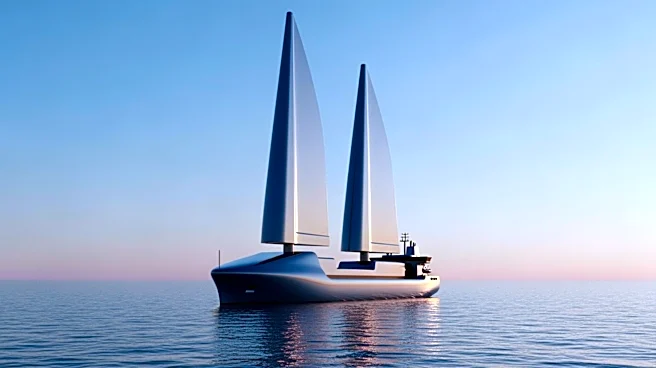
Mitsui O.S.K. Lines (MOL), in collaboration with Hanwha Ocean and ClassNK, has successfully completed the first-ever installation of solid wind sails on a liquefied natural gas (LNG) carrier. This innovative project is part of a broader effort to incorporate
wind-assisted propulsion technology into maritime shipping, aiming to reduce fuel consumption and emissions. The vessel, ordered in 2024 and set for delivery in 2026, features two Wind Challenger rigid sails, each composed of three panels. When fully extended, these sails stand approximately 49 meters above the deck and are about 15 meters wide. The installation is part of a long-term agreement between MOL and Chevron Shipping, with the vessel being one of two that will feature this technology. The sails are expected to provide up to 12 percent fuel savings per voyage, depending on weather and sea conditions.
Why It's Important?
The installation of solid wind sails on LNG carriers marks a significant advancement in the shipping industry's efforts to reduce carbon emissions and improve fuel efficiency. As global regulations tighten around emissions, innovations like the Wind Challenger System offer a viable solution for shipping companies to meet environmental standards. The potential 12 percent reduction in fuel consumption per voyage not only translates to cost savings but also contributes to the industry's sustainability goals. This development could set a precedent for other shipping companies to adopt similar technologies, thereby accelerating the transition to greener maritime operations. The collaboration between MOL, Hanwha Ocean, and ClassNK highlights the importance of cross-industry partnerships in driving technological advancements and addressing environmental challenges.
What's Next?
The first vessel equipped with the Wind Challenger System is scheduled for delivery in the second half of fiscal year 2026. As the shipping industry continues to explore sustainable technologies, the success of this project could lead to wider adoption of wind-assisted propulsion systems. Stakeholders, including shipping companies and environmental regulators, will likely monitor the performance of these sails closely. If successful, this technology could be expanded to other types of vessels, further reducing the maritime industry's carbon footprint. Additionally, MOL's commitment to incorporating this technology into another LNG carrier under a long-term charter with Tokyo LNG Tanker Company suggests a growing interest in sustainable shipping solutions.