



What's Happening?
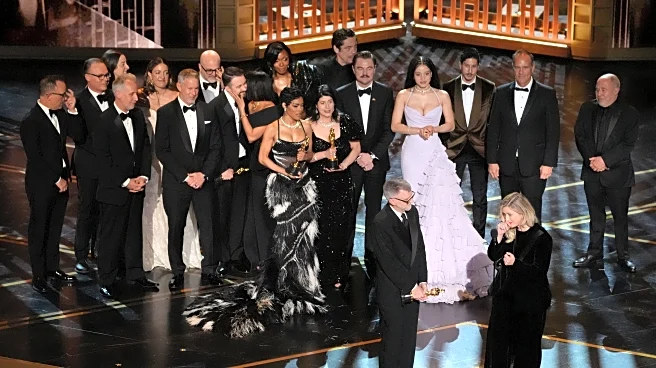
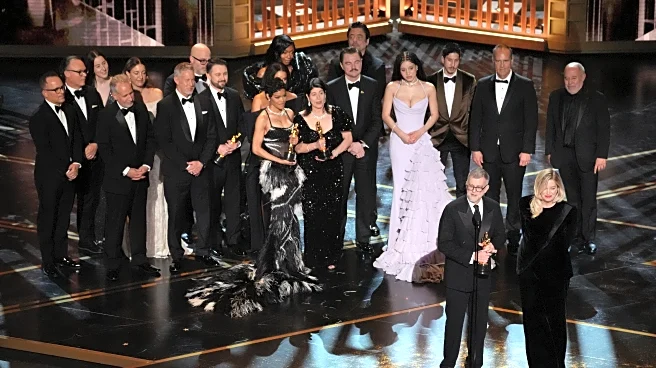
The 98th Academy Awards, held on March 15, 2026, celebrated a diverse array of films with 'One Battle After Another' winning Best Picture and Paul Thomas Anderson taking home Best Director. Michael B. Jordan won Best Actor for his role in 'Sinners,' marking
a rare win for a genre film. Jessie Buckley was awarded Best Actress for 'Hamnet.' The ceremony also introduced a new category, with Cassandra Kulukundis winning the first-ever Oscar for casting for her work on 'One Battle After Another.' Additionally, Autumn Durald Arkapaw made history as the first woman to win Best Cinematography for 'Sinners.' The event was notable for its inclusivity and recognition of diverse talents across the film industry.
Why It's Important?
The 2026 Oscars highlighted significant shifts in the film industry, emphasizing diversity and the recognition of genre films. Michael B. Jordan's win for a horror film underscores a growing acceptance of genre films in prestigious award categories, potentially encouraging more diverse storytelling in Hollywood. The introduction of a casting award acknowledges the critical role casting directors play in film production, setting a precedent for future ceremonies. Autumn Durald Arkapaw's win as the first woman of color in cinematography marks a milestone for gender and racial representation in technical categories, inspiring future generations of filmmakers.
What's Next?
Following the Oscars, the film industry may see increased investment in genre films and a broader acceptance of diverse narratives. The recognition of casting as an award category could lead to more nuanced and varied casting choices in future films. The historic wins for women and people of color in technical categories may encourage studios to prioritize diversity in their hiring practices. As the industry evolves, these changes could lead to a more inclusive and representative cinematic landscape.
Beyond the Headlines
The Oscars' recognition of diverse talents and genres may influence cultural perceptions of what constitutes award-worthy cinema. This shift could challenge traditional norms and encourage audiences to explore a wider range of films. The emphasis on diversity and inclusion at the Oscars reflects broader societal changes and could contribute to ongoing discussions about representation in media. As the industry adapts, these developments may have lasting impacts on how stories are told and who gets to tell them.