

What's Happening?
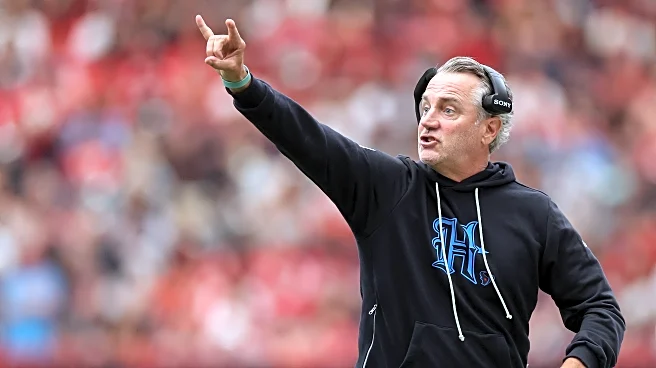
The U.S. District Court for the Southern District of New York has ruled that the class-action lawsuit alleging racial discrimination against the NFL, filed by former Miami Dolphins coach Brian Flores, can proceed to trial. This decision upholds previous rulings by the 2nd U.S. Circuit Court of Appeals and U.S. District Court Judge Valerie Caproni, which rejected the NFL's attempt to resolve the matter through arbitration. Flores, joined by former Arizona Cardinals coach Steve Wilks and assistant Ray Horton, claims racial discrimination in the league's hiring practices. Flores alleges that the Denver Broncos, New York Giants, and Houston Texans interviewed him only to comply with the Rooney Rule, which mandates consideration of minority candidates
for head-coach positions. The lawsuit also includes evidence of text messages from former New England Patriots coach Bill Belichick, mistakenly congratulating Flores on a job he had not yet interviewed for.
Why It's Important?
This ruling is significant as it challenges the NFL's reliance on arbitration, which critics argue is biased and lacks transparency. The decision could set a precedent for how discrimination claims are handled within the league, potentially leading to more open and fair processes. The case highlights ongoing issues of racial inequality in the NFL's hiring practices, drawing attention to the need for systemic change. If successful, the lawsuit could lead to reforms that ensure minority candidates are given genuine consideration for coaching positions, impacting the careers of many aspiring coaches and the league's overall diversity.
What's Next?
The trial will proceed in open court, where Flores and his co-plaintiffs will present their case. The NFL may face increased scrutiny and pressure to address its hiring practices and the effectiveness of the Rooney Rule. The outcome of this trial could influence future policies and practices within the league, potentially leading to broader changes in how discrimination claims are handled in professional sports. Stakeholders, including team owners, players, and civil rights organizations, will likely be closely monitoring the proceedings.