
What's Happening?
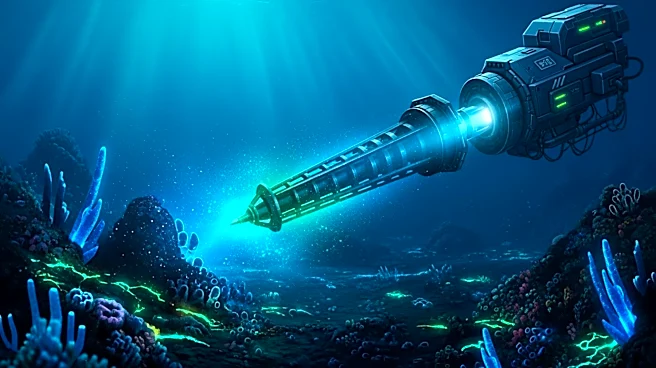
In the year following President Trump's executive order to establish a deep-sea mining industry, significant developments have occurred. Businesses have raised substantial investment funds, and stock prices
have surged as federal regulators expedite the permitting process. At least nine companies are negotiating with the government for access to seabed minerals, with potential auctions for offshore mining rights from American Samoa to Alaska expected soon. This initiative marks a shift in U.S. policy, as the country moves towards independently deciding when to mine the global seabed, diverging from previous adherence to international seabed authority rules. However, this push has sparked environmental and economic concerns, particularly in U.S. Pacific territories where local leaders fear the impact of mining activities.
Why It's Important?
The development of a U.S. deep-sea mining industry could have significant implications for national economic independence, particularly in reducing reliance on China for critical minerals. The initiative aims to tap into vast seabed resources, potentially boosting the U.S. economy and securing strategic minerals essential for technology and defense. However, the environmental risks associated with deep-sea mining, such as potential harm to marine ecosystems, have raised alarms among local communities and environmentalists. The economic viability of these ventures is also under scrutiny, with questions about the profitability and sustainability of mining operations. The outcome of this initiative could set a precedent for future U.S. resource extraction policies and international maritime regulations.
What's Next?
The federal government is expected to continue fast-tracking the permitting process, with the first lease sales potentially occurring as early as August. Companies involved in the initiative are preparing for commercial mining operations, with some aiming to begin extraction by the end of next year. However, the industry faces challenges, including technological hurdles, environmental opposition, and the need for domestic processing facilities. The U.S. government may need to address these issues to ensure the project's success and mitigate potential legal and environmental conflicts. The ongoing debate over deep-sea mining's impact and feasibility will likely influence future regulatory and policy decisions.
Beyond the Headlines
The push for deep-sea mining raises broader ethical and legal questions about resource ownership and environmental stewardship. The U.S. decision to bypass international seabed authority rules could lead to geopolitical tensions and legal disputes with other nations. Additionally, the environmental impact of mining on fragile marine ecosystems poses ethical dilemmas about balancing economic growth with conservation. The industry's reliance on foreign processing facilities also highlights the complexities of global supply chains and the need for strategic planning in resource management. These factors underscore the importance of comprehensive regulatory frameworks to address the multifaceted challenges of deep-sea mining.