



What's Happening?
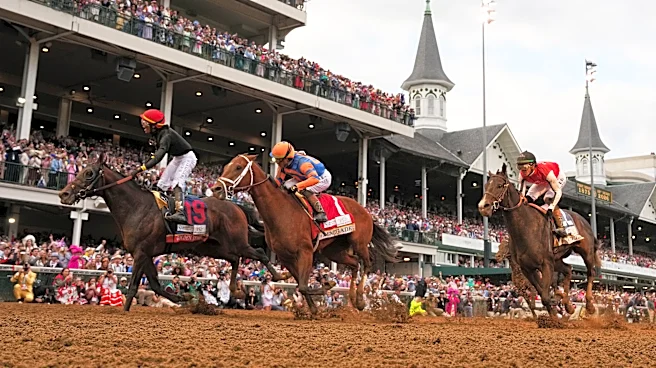
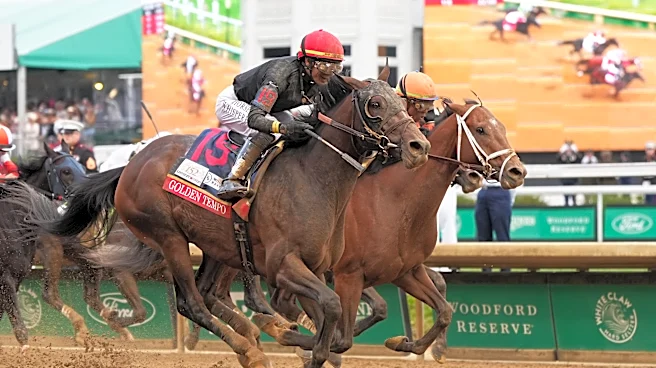
The 152nd Kentucky Derby witnessed a historic and dramatic victory as Golden Tempo, trained by Cherie DeVaux, became the first horse to win the race from a last-place position. This victory also marked a significant milestone as DeVaux became the first female
trainer to win the prestigious event. The race was notable for its unexpected outcome, with Golden Tempo overcoming a slow start to finish first, captivating audiences and making headlines. The event was further highlighted by a sibling rivalry at the finish line, where jockey Jose Ortiz, riding Golden Tempo, defeated his brother Irad Ortiz Jr. Despite the challenges, DeVaux's emotional reaction at the finish line resonated with many, adding to the race's memorable narrative.
Why It's Important?
Golden Tempo's victory at the Kentucky Derby is significant not only for its dramatic nature but also for its impact on the horse racing industry. Cherie DeVaux's achievement as the first female trainer to win the Derby challenges traditional gender roles in the sport, potentially inspiring more women to pursue careers in horse racing. The race also underscores the unpredictability and excitement of horse racing, which can attract new fans and increase viewership. Additionally, the win places DeVaux and Golden Tempo in the spotlight, potentially leading to increased media attention and opportunities within the industry. This event may also influence future race strategies, as it highlights the potential for horses starting from behind to secure victories.
What's Next?
Following Golden Tempo's victory, there is speculation about whether the horse will compete in the upcoming Preakness Stakes, the second leg of the Triple Crown. The decision will depend on various factors, including the horse's condition and the strategic interests of DeVaux and the ownership group. The outcome of this decision could impact the dynamics of the Preakness, especially if other Derby contenders opt out of the race. Additionally, the success of the Kentucky Derby in primetime may influence future scheduling decisions, potentially leading to more races being held at night to maximize viewership and betting revenue. This shift could have broader implications for the horse racing industry and its traditional practices.
Beyond the Headlines
The Kentucky Derby's shift to a primetime event has sparked discussions about the balance between tradition and commercial interests in horse racing. While the move has increased viewership and betting revenue, it has also drawn criticism from local residents in Louisville, who feel that the changes have disrupted the community's longstanding traditions. This tension highlights the broader challenge of maintaining cultural heritage while adapting to modern economic pressures. The success of the primetime event may prompt further changes in the scheduling of major races, potentially altering the landscape of horse racing and its relationship with local communities.