





What's Happening?
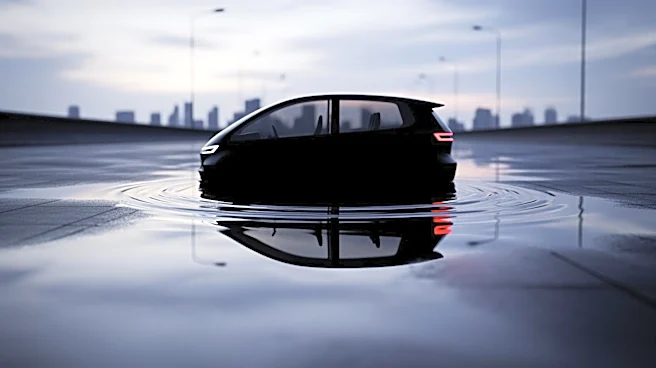
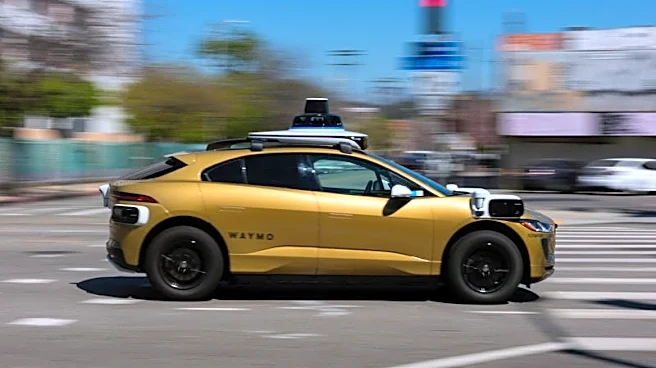
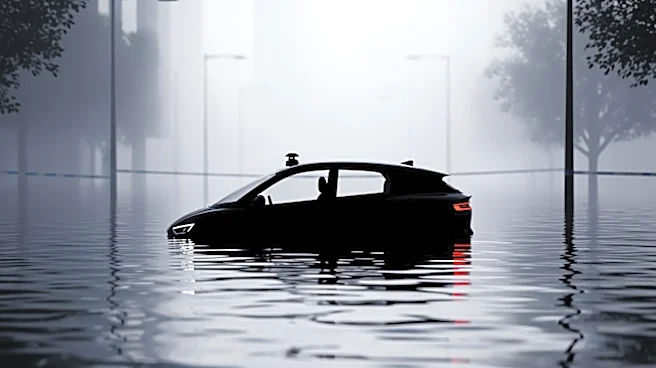
Waymo's self-driving ride-hailing service in Atlanta has been suspended following an incident where one of its autonomous vehicles became stuck in floodwaters on a Midtown street. The vehicle was unoccupied at the time. This incident highlights a challenge
for autonomous vehicles in assessing the depth of water on flooded streets. Georgia Tech researchers noted that current LIDAR and radar technologies used by these vehicles are not well-suited for estimating water depth, which can pose significant problems during flooding. The incident is considered a 'corner case,' a rare scenario that companies like Waymo use to improve their systems. Despite the setback, experts believe that autonomous vehicles are safe under normal conditions and will become safer as technology advances.
Why It's Important?
The suspension of Waymo's service in Atlanta underscores the ongoing challenges faced by autonomous vehicle technology, particularly in adverse weather conditions. This incident could impact public perception and trust in self-driving technology, as it raises questions about the readiness of these vehicles to handle unexpected situations. The event also highlights the need for further advancements in sensor technology to improve the vehicles' ability to navigate complex environments. As companies like Waymo continue to refine their systems, the industry as a whole could see increased scrutiny and regulatory interest, potentially affecting the pace of autonomous vehicle deployment and adoption.
What's Next?
Waymo has not announced when its service in Atlanta will resume. The company is likely to analyze the incident to improve its systems and prevent similar occurrences in the future. This may involve enhancing the vehicle's ability to assess environmental conditions, such as water depth, more accurately. The incident could also prompt discussions among policymakers and industry leaders about the standards and regulations governing autonomous vehicles, particularly in relation to safety and environmental adaptability. As the technology evolves, achieving 'Level 5' autonomy, where vehicles can operate under any condition, remains a long-term goal for the industry.