
What's Happening?
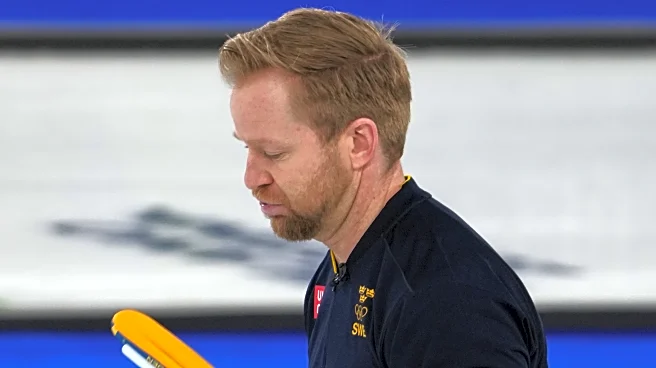
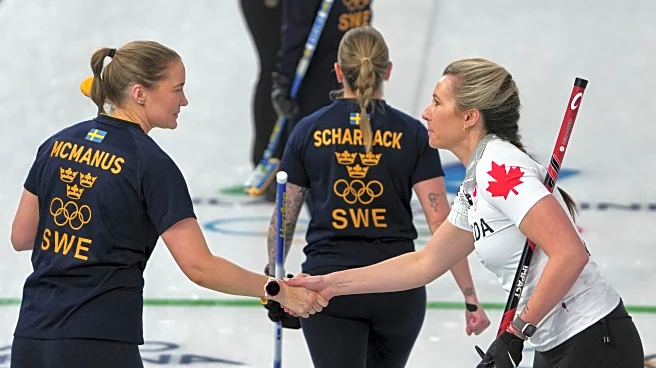
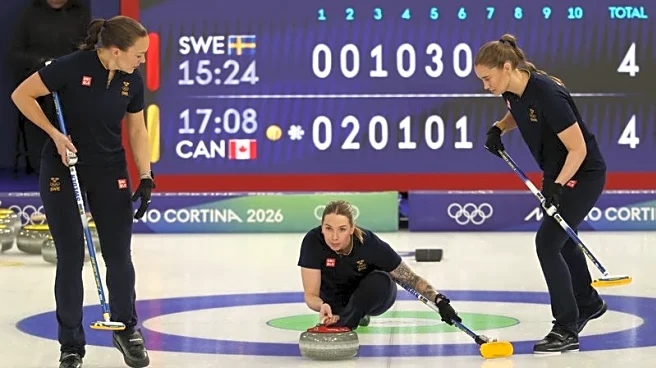
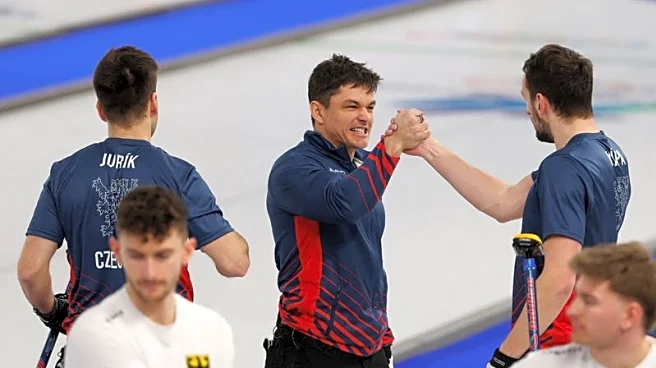
The World Curling Federation faced a controversy at the Winter Olympics in Cortina D’Ampezzo, Italy, over its decision to increase umpire presence during matches. This move was in response to accusations of rule-breaking, specifically regarding the 'double-touch' rule, where a curler touches the stone again after its initial release. The controversy began when Swedish curler Oskar Eriksson accused Canadian Marc Kennedy of such an infraction, leading to heightened scrutiny. However, the increased monitoring was met with dissatisfaction from athletes who preferred the traditional self-officiating spirit of the sport. Following a meeting with national curling federations, World Curling decided to retract the umpires, making them available only
upon request.
Why It's Important?
This incident highlights the tension between maintaining the traditional ethos of curling and adapting to increased professionalism and scrutiny at the Olympic level. The decision to reduce umpire presence reflects the athletes' desire to preserve the sport's self-regulating nature, which is seen as a point of pride. The controversy also underscores the challenges sports face in balancing tradition with the need for clear and fair rule enforcement, especially in high-stakes environments like the Olympics. The outcome of this decision could influence how other sports handle similar issues of officiating and athlete autonomy.
What's Next?
As the Winter Olympics continue, it remains to be seen how this decision will affect the remaining curling matches. The World Curling Federation may need to reassess its officiating policies post-Olympics to address any lingering concerns from athletes and officials. Additionally, the incident could prompt discussions within the curling community about the future of officiating and the role of technology in ensuring fair play. Stakeholders, including national federations and athletes, may push for a more balanced approach that respects the sport's traditions while ensuring compliance with rules.