







What's Happening?
The U.S. Federal Reserve is expected to hold its key interest rate steady for the remainder of 2026, according to a Reuters poll of economists. This decision comes as inflation, driven by ongoing Middle East war-related energy shocks, remains more persistent
than anticipated. The Fed's preferred inflation gauge, the Personal Consumption Expenditures Price Index, rose to 3.8% year-on-year in April, with forecasts suggesting it will average 3.9%, 3.8%, and 3.6% in the subsequent quarters. Despite previous expectations of transitory inflation pressures, the persistence of these pressures has led to a shift in economic forecasts, with most economists now predicting no rate cuts this year. The jobless rate is expected to remain around 4.3%, while economic growth is projected to average about 2% over the coming years.
Why It's Important?
The decision to maintain interest rates reflects the Fed's cautious approach in managing inflation without stifling economic growth. Persistent inflation can erode purchasing power and affect consumer confidence, potentially slowing economic recovery. By holding rates steady, the Fed aims to balance these concerns while monitoring economic indicators closely. This decision impacts various stakeholders, including businesses and consumers, as borrowing costs remain unchanged, influencing investment and spending decisions. Additionally, the Fed's stance signals its commitment to addressing inflationary pressures, which could affect future monetary policy and economic stability.
What's Next?
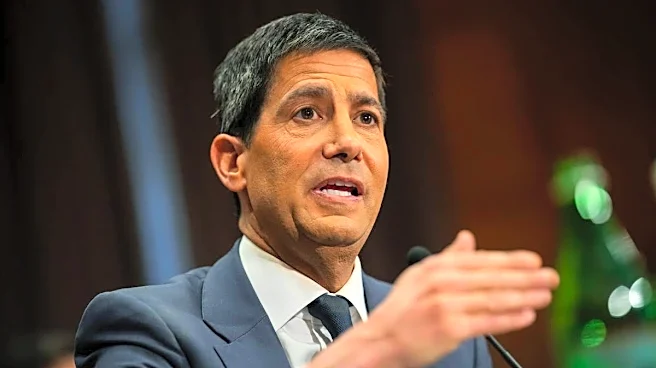
The Federal Open Market Committee's upcoming meeting on June 16-17 will be closely watched for any changes in policy direction. Fed Chairman Kevin Warsh, under pressure to lower rates, may face challenges in building consensus for rate cuts. The Fed's updated quarterly 'dot plot' forecasts are expected to signal steady rates, with some economists anticipating potential rate hikes if inflation persists. The ongoing Middle East conflict and its impact on energy prices will continue to be a significant factor in the Fed's decision-making process. Stakeholders will be monitoring these developments to gauge the Fed's future actions and their implications for the U.S. economy.