




What's Happening?
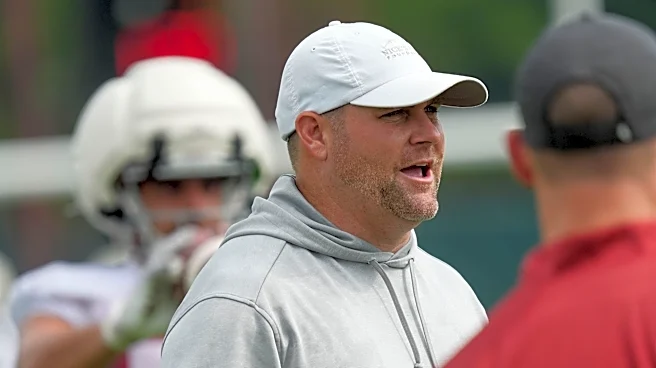
Texas head coach Steve Sarkisian has publicly criticized the academic standards of the University of Mississippi (Ole Miss) in the context of recruiting through the NCAA transfer portal. Sarkisian claims that Ole Miss has lowered its academic requirements
to attract recruits, contrasting this with Texas' policy of accepting only 50% of a player's academic credit hours. This criticism comes amid a broader discussion about the state of the NCAA and the impact of the transfer portal on college sports. Ole Miss is currently under scrutiny due to allegations of tampering with recruits, including a specific incident involving linebacker Luke Ferrelli. Clemson head coach Dabo Swinney accused Ole Miss of inappropriate recruiting practices, prompting an NCAA investigation. Despite these allegations, Ole Miss has been recognized for academic achievements, with several players maintaining high GPAs.
Why It's Important?
The comments by Sarkisian highlight ongoing tensions and challenges within college sports, particularly regarding the transfer portal and academic integrity. The transfer portal has significantly altered the landscape of college athletics, allowing players more freedom to move between programs. This has led to increased competition among schools to attract top talent, sometimes at the expense of academic standards. The allegations against Ole Miss, if proven true, could have serious implications for the program, potentially leading to sanctions or changes in recruiting practices. This situation underscores the need for clear regulations and oversight to ensure fair play and maintain the educational mission of college sports.
What's Next?
The NCAA's investigation into the tampering allegations against Ole Miss is ongoing. Depending on the findings, Ole Miss could face penalties or be required to adjust its recruiting practices. The broader debate about the transfer portal and its impact on college sports is likely to continue, with potential calls for reform to balance athletic and academic priorities. Stakeholders, including university administrators, coaches, and the NCAA, may need to collaborate on developing policies that address these challenges while supporting student-athletes' rights and educational goals.