







What's Happening?
Researchers have explored the use of hyperaccumulator plants for phytomining rare earth elements (REEs) from soils, as detailed in a recent study published in Communications Earth & Environment. This method offers a sustainable alternative to traditional
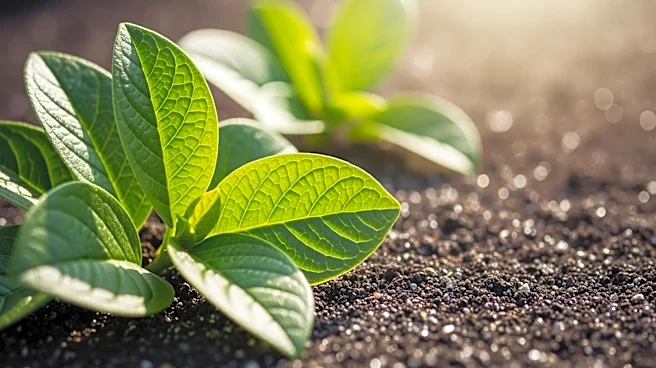
mining by utilizing plants to extract REEs from soils, particularly in areas with REE-enriched soils such as mine tailings and contaminated sites. The study highlights the potential of plants like Dicranopteris linearis and Phytolacca americana, which can accumulate significant amounts of REEs in their biomass. The process involves hydrometallurgical techniques to recover REEs from the harvested biomass, aiming to produce high-purity rare-earth oxides. This approach not only supports sustainable resource extraction but also converts waste sites into productive material sources.
Why It's Important?
The significance of this development lies in its potential to address the growing global demand for rare earth elements, which are crucial for modern technologies such as high-strength magnets and LED screens. Traditional mining methods for REEs are often environmentally damaging and resource-intensive. Phytomining offers a low-carbon alternative that could reduce the environmental impact of REE extraction. By turning underutilized resources like mine tailings into economically viable sources of REEs, this method could enhance resource circularity and sustainability. Additionally, the integration of phytomining into existing land uses and mining rehabilitation could provide socio-economic benefits, particularly in regions affected by mining-related land degradation.
What's Next?
Future research will focus on optimizing the phytomining process through field trials and breeding programs to enhance the efficiency of metal crop cultivation. There is also a need for international collaboration to facilitate the practical application of this technology. Addressing the economic and environmental challenges associated with the recovery methods is crucial for the commercial viability of phytomining. Moreover, careful management of environmental risks related to co-accumulated toxic elements will be necessary to ensure the safety and sustainability of this approach. As phytomining technology advances, it could play a significant role in supplementing traditional REE supply chains.
Beyond the Headlines
Phytomining represents a shift towards more sustainable and environmentally friendly resource extraction methods. By leveraging the natural capabilities of plants to accumulate metals, this approach could reduce reliance on conventional mining, which is often associated with high carbon emissions and ecological disruption. The potential for direct conversion of REE-rich biomass into functional materials like specialty fertilizers and catalysts adds economic value and further reduces the carbon footprint. As the technology matures, it could contribute to a more circular economy and support global efforts to transition to low-carbon technologies.