



What's Happening?
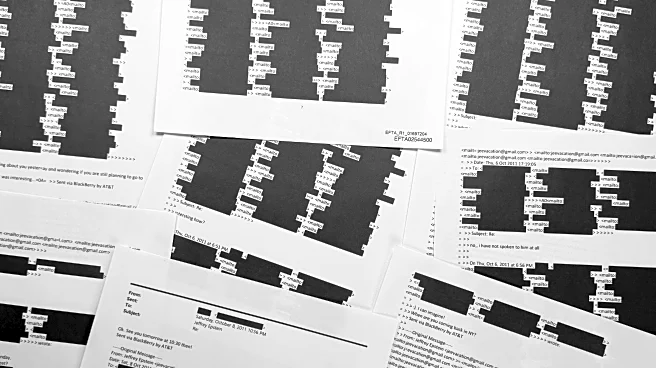
The Contemporary Theater Company in Wakefield, Rhode Island, has canceled its planned production of Lauren Gunderson's play 'The Revolutionists' following the release of emails between Gunderson's estranged husband, Nathan Wolfe, and Jeffrey Epstein. The theater stated that the decision was not intended to harm Gunderson's reputation but was necessary due to actors withdrawing from auditions, impacting production timelines. Gunderson, a prominent playwright, expressed her dismay over the situation, clarifying that she had no personal connection to Epstein and was unaware of her husband's communications with him. The emails, released by the Justice Department, mention Gunderson in connection to Wolfe, who sought research funding from Epstein. Gunderson has publicly
condemned Epstein's actions and emphasized her lack of involvement.
Why It's Important?
This incident highlights the complex challenges faced by individuals and institutions when historical associations with controversial figures come to light. The theater's decision reflects the broader societal scrutiny and reputational risks associated with any connection to Epstein, a convicted sex offender. For Gunderson, the cancellation underscores the potential professional repercussions of personal associations, even when indirect. The situation also raises questions about accountability and the impact of past associations on current professional opportunities. The theater's actions may set a precedent for how similar cases are handled in the arts community, where reputational considerations can significantly influence programming decisions.
What's Next?
The Contemporary Theater Company has indicated that it will not stage 'The Revolutionists' this spring but remains open to producing Gunderson's work in the future, pending further developments. Gunderson's response and the theater's clarification may prompt discussions within the arts community about the balance between artistic merit and reputational concerns. The situation could lead to increased scrutiny of past associations for other artists and institutions. Gunderson's supporters have criticized the decision, suggesting a potential backlash against the theater's approach. The outcome may influence how theaters and other cultural institutions navigate similar controversies in the future.
Beyond the Headlines
The controversy touches on broader themes of gender and accountability, as highlighted by critics who argue that women often face harsher consequences for associations with controversial figures compared to men. This case may contribute to ongoing discussions about gender dynamics in the arts and the differential treatment of men and women in public controversies. Additionally, the incident raises ethical questions about the extent to which individuals should be held accountable for the actions of their associates, particularly in cases where there is no direct involvement. The theater's decision and Gunderson's response may prompt further debate on these issues.