



What's Happening?
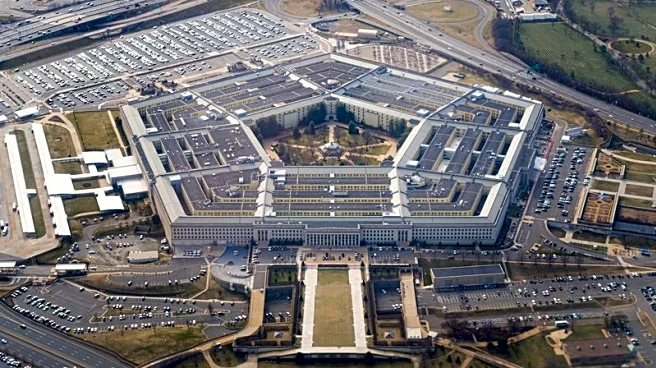
Nvidia CEO Jensen Huang addressed the ongoing dispute between the U.S. Defense Department and the AI company Anthropic, stating that the situation is 'not the end of the world.' The conflict arose after U.S. Defense Secretary Pete Hegseth issued an ultimatum
to Anthropic, demanding that the company relax its restrictions on how the Pentagon can utilize its AI tools. Failure to comply could result in Anthropic being labeled a 'supply chain risk' or facing actions under the Defense Production Act. Huang emphasized that both the Defense Department and Anthropic have valid perspectives, with the former seeking to use technology in ways that serve its interests and the latter having the right to determine the marketing and use cases of its products.
Why It's Important?
This dispute highlights the complex relationship between government agencies and private tech companies, particularly in the realm of artificial intelligence. The outcome of this conflict could set a precedent for how AI technologies are regulated and utilized by government entities. If the Pentagon enforces its demands, it could lead to increased government oversight and influence over tech companies' operations, potentially affecting innovation and market dynamics. Conversely, if Anthropic maintains its stance, it could encourage other tech firms to assert more control over their products' applications, impacting future government contracts and collaborations.
What's Next?
The immediate next step involves Anthropic's decision on whether to comply with the Pentagon's demands by the given deadline. Depending on Anthropic's response, the Defense Department may proceed with labeling the company a 'supply chain risk' or invoking the Defense Production Act. This could lead to legal challenges or negotiations to find a middle ground. The tech industry and government agencies will be closely watching the developments, as the resolution could influence future policies and partnerships in the AI sector.