



What's Happening?
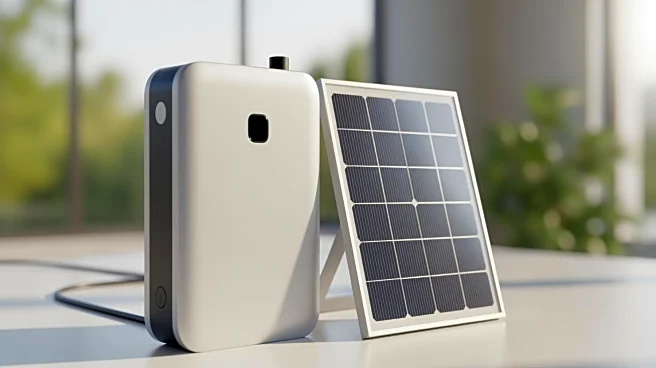
Anker has introduced the Solix E10, a new home battery backup system that integrates solar power and a smart fuel generator. The system is designed to provide reliable power during outages or emergencies, with a scalable setup that allows users to add multiple batteries. Each E10 unit can deliver up to 37.2 kilowatts (kW) of power, sufficient to run demanding appliances like a 5-ton air conditioner. The system supports a turbo output of 10 kW per unit for up to 90 minutes, ensuring essential devices such as medical equipment and refrigeration remain operational. The E10 is compatible with all types of solar panels and can be paired with a Power Dock for whole-home backup or a Smart Inlet Box for manual switchover during outages. The system is available
for purchase starting at $3,799, with additional configurations and accessories available.
Why It's Important?
The launch of Anker's Solix E10 system is significant as it addresses the growing demand for reliable and sustainable home energy solutions. With increasing occurrences of power outages due to extreme weather and other factors, having a robust backup system is crucial for maintaining essential services. The integration of solar power not only provides a renewable energy source but also reduces dependency on traditional power grids, aligning with broader environmental goals. This system offers flexibility and scalability, making it suitable for various household needs and potentially reducing long-term energy costs. The availability of such technology could drive further adoption of renewable energy solutions in residential settings, contributing to a more resilient and sustainable energy infrastructure.
What's Next?
As the Solix E10 becomes available, consumers and industry stakeholders will likely evaluate its performance and cost-effectiveness compared to existing solutions. The system's scalability and compatibility with various solar panels may attract homeowners looking to enhance their energy independence. Additionally, Anker's offering could prompt competitors to innovate and expand their product lines to include similar features. Regulatory bodies and energy policymakers might also take interest in how such systems can be integrated into broader energy strategies, potentially influencing future incentives or regulations for renewable energy adoption.