


What's Happening?
Pace University is offering its 'Producing the Documentary' course, a staple elective in the Media, Communications, and Visual Arts (MCVA) department, which has been running since 2006. This year marks a new era for the course as it transitions under
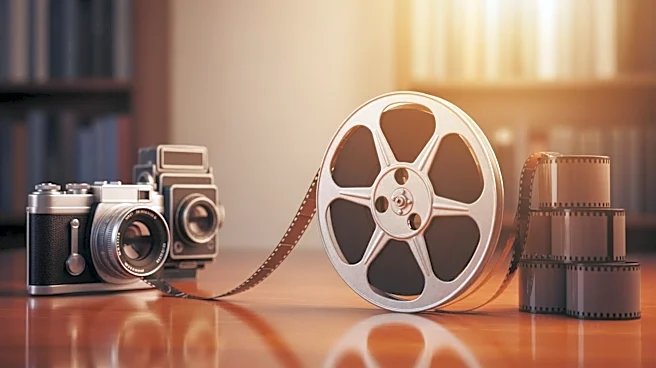
the leadership of Lou Guarneri, a Pace alum and current MCVA professor, following the retirement of Dr. Maria Luskay. The course involves students in creating a documentary film over 14 weeks, encompassing all stages from pre-production to editing. This year, the documentary focuses on a 20-year retrospective of the course itself, exploring its impact on students and alumni. The class travels to various locations, including Massachusetts, Maine, and New Hampshire, to conduct interviews, although many have already been completed locally in New York.
Why It's Important?
The documentary course at Pace University provides students with hands-on experience in filmmaking, preparing them for careers in media production. By participating in the creation of documentaries, students gain practical skills in research, interviewing, and editing, which are crucial for the industry. The retrospective documentary not only highlights the course's impact on students but also serves as a testament to the educational value and experiential learning opportunities provided by Pace University. This initiative supports the development of future filmmakers and enhances the university's reputation in media education.
What's Next?
The documentary produced by the course will premiere at the Jacob Burns Film Center on May 11, offering students a platform to showcase their work. Additionally, the documentaries are submitted to film festivals, providing students with the opportunity to be part of award-winning projects. This exposure can significantly enhance their career prospects in the media industry. The course continues to evolve, integrating both undergraduate and graduate students, and adapting to new teaching methods and technologies.
Beyond the Headlines
The course's integration of graduate students, who often participate remotely, reflects the changing landscape of education and media production. This approach allows for a diverse range of skills and perspectives, enriching the learning experience. The retrospective documentary also serves as a cultural artifact, preserving the history and evolution of the course, and highlighting the importance of storytelling in education.