


What's Happening?
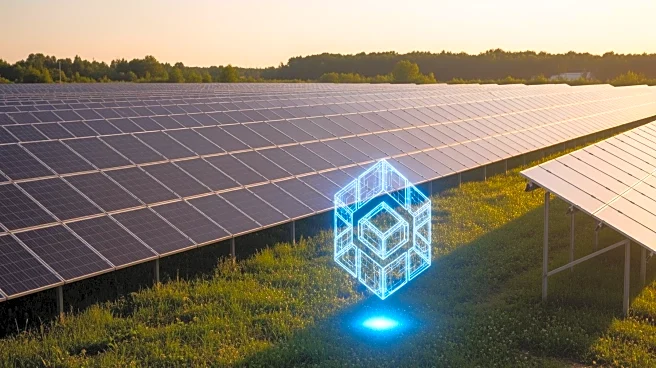
French utility company ENGIE is considering the deployment of Bitcoin mining infrastructure at its solar farm in Brazil. This initiative aims to utilize excess energy that the local grid cannot absorb due to infrastructure limitations. The Assu Sol solar plant,
which is the largest in ENGIE's portfolio, has been experiencing curtailment since its activation in February 2026. The Brazilian government's recent fintech-friendly policy changes, including the elimination of import duties on high-efficiency mining hardware, have created a conducive environment for such crypto operations. ENGIE's exploration of Bitcoin mining represents a potential convergence of renewable energy and financial technology.
Why It's Important?
The exploration of Bitcoin mining by ENGIE highlights a novel approach to addressing the challenges of energy curtailment in renewable energy projects. By converting excess solar power into cryptocurrency, ENGIE could potentially create a new revenue stream while also contributing to the stability of the local energy grid. This move could set a precedent for other renewable energy providers facing similar curtailment issues, promoting the integration of digital infrastructure solutions. Additionally, the policy changes in Brazil could attract more international investments in the fintech and renewable energy sectors, potentially boosting economic growth and technological innovation.
What's Next?
ENGIE's exploration of Bitcoin mining is still in the evaluation phase, with implementation expected to take a couple of years. The company is currently looking for potential offtakers for the mined cryptocurrency. As the project progresses, it will be important to monitor the regulatory environment in Brazil and the response from other energy providers. The success of this initiative could lead to broader adoption of similar strategies in other regions with renewable energy curtailment issues.