





What's Happening?
The global agriculture drones market is projected to grow significantly, with a CAGR of 32.6% from 2025 to 2030, increasing from $2.63 billion to $10.76 billion. Agriculture drones, equipped with advanced sensors and cameras, provide real-time insights
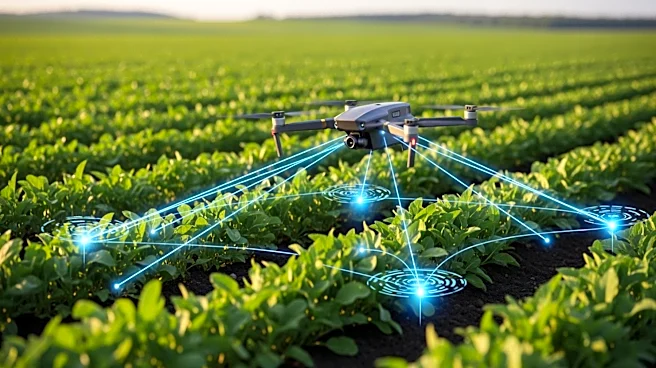
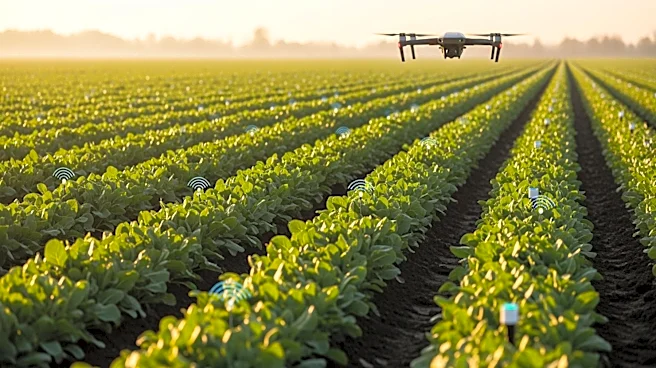
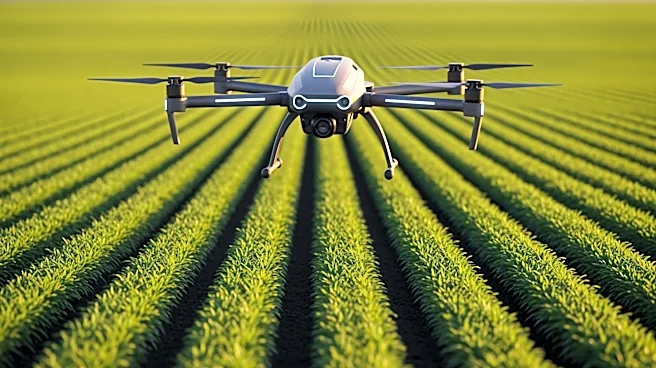
into crop health and farm productivity. They are used for crop monitoring, precision spraying, soil analysis, and yield forecasting, enabling data-driven decisions that enhance efficiency and reduce resource wastage. Key growth drivers include rising demand for precision farming, technological advancements, labor shortages, and government support. Small payload drones are the fastest-growing segment due to their affordability and ease of operation, making them ideal for small and medium-sized farms.
Why It's Important?
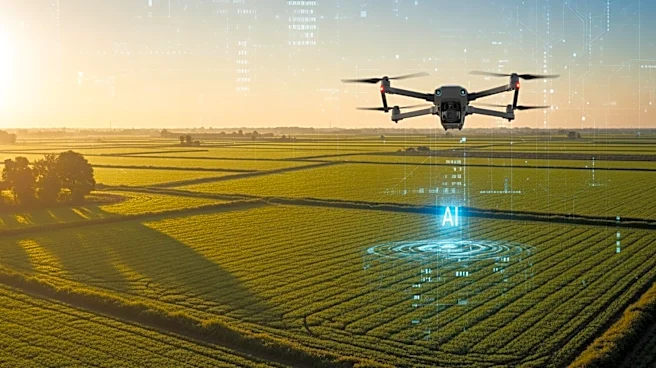
Agriculture drones are revolutionizing farming practices by providing precise data that improves crop management and productivity. They address labor shortages and enhance efficiency, reducing dependency on manual labor. The integration of AI and IoT with drones is expected to further optimize farming operations. Government support and smart farming initiatives are accelerating drone adoption, particularly in regions like Asia Pacific. The market's growth reflects a broader trend towards digital transformation in agriculture, emphasizing sustainability and resource efficiency.
What's Next?
The future of agriculture drones lies in deeper integration with AI, machine learning, and IoT. As connectivity improves and costs decrease, drone adoption is expected to expand rapidly. Key trends include autonomous drone operations, AI-driven crop analytics, and the expansion of Drone-as-a-Service models. The Asia Pacific region is expected to maintain its dominance due to large agricultural landscapes and strong government support. Companies are focusing on innovation and service-based models to expand their market reach.