

What's Happening?
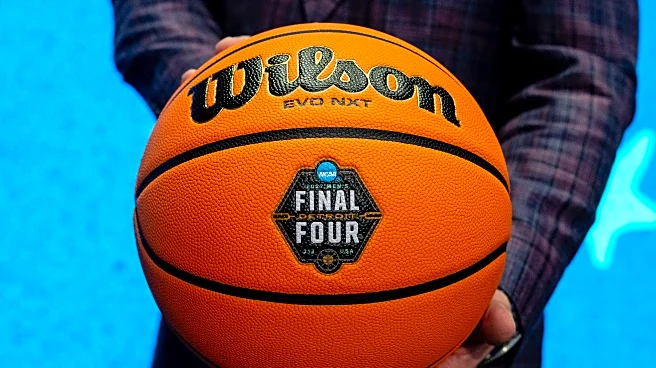
The Big Ten Conference is making headlines with its strong performance in the NCAA Men's Basketball Tournament, as both Illinois and Michigan have advanced to the Final Four. This marks a significant achievement for the conference, which has not seen
a national champion in 26 years. Illinois' success, in particular, is attributed to the leadership of Coach Brad Underwood, who emphasizes discipline and accountability. His approach mirrors that of other successful coaches in the conference, such as Michigan State's Tom Izzo, who advocates for holding players accountable to their dreams and goals. The current season has been marked by the influence of Name, Image, and Likeness (NIL) deals, which have shifted power towards players, yet the Big Ten's success underscores the importance of team cohesion and strong coaching.
Why It's Important?
The Big Ten's performance in the tournament is significant as it challenges the narrative that college basketball has become purely transactional due to NIL deals. The success of Illinois and Michigan highlights the enduring importance of traditional values such as teamwork, discipline, and accountability in achieving success. This development could influence how other programs approach team building and player development, potentially leading to a reevaluation of the balance between individual player rights and team cohesion. For the Big Ten, a national championship would not only end a long drought but also reinforce the conference's reputation as a powerhouse in college basketball.
What's Next?
As Illinois and Michigan prepare for their Final Four matchups, the focus will be on maintaining the discipline and cohesion that have brought them this far. A potential championship game between the two teams would be a historic event for the Big Ten, further solidifying its status in college basketball. The outcomes of these games could also impact recruiting strategies and the approach to NIL deals across the conference, as other programs may look to emulate the successful models demonstrated by Illinois and Michigan.
Beyond the Headlines
The success of the Big Ten teams this season may prompt a broader discussion about the role of coaching in the era of NIL. While financial incentives are important, the value of mentorship and personal development provided by coaches like Underwood and Izzo cannot be overlooked. This could lead to a renewed appreciation for the educational and developmental aspects of college sports, potentially influencing policy decisions at the NCAA level regarding the balance between player compensation and educational opportunities.