



What's Happening?
On Monday, U.S. stock markets experienced a significant surge following President Trump's announcement to postpone military strikes on Iran's energy infrastructure. The decision came after what Trump described as 'very good and productive conversations'
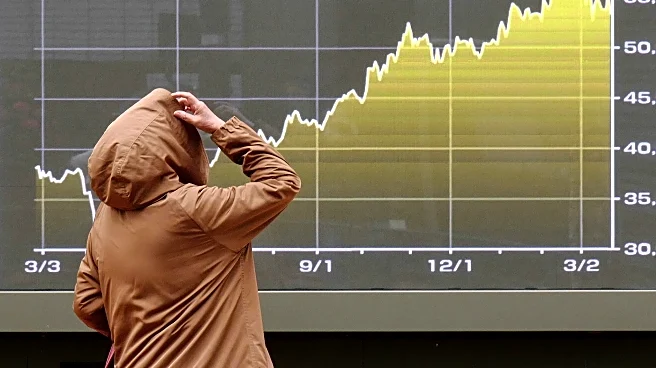
with Tehran, aimed at resolving ongoing conflicts. This announcement led to a rapid increase in U.S. stock futures and a decrease in oil prices. The Dow Jones Industrial Average, which was nearing a correction phase, surged over 1,000 points before closing 630 points higher, marking a 1.4% increase. Similarly, the S&P 500 and Nasdaq saw gains of 1.2% and 1.4%, respectively. This market reaction reflects a pattern where traders respond to Trump's statements, despite previous instances where his comments have been retracted or modified.
Why It's Important?
The market's response underscores the influence of presidential announcements on financial markets, particularly when it involves geopolitical tensions. President Trump's decision to delay military action against Iran alleviated immediate concerns over potential disruptions in the global oil supply, which in turn stabilized oil prices. This situation highlights the sensitivity of markets to geopolitical developments and the role of presidential diplomacy in economic stability. Investors' reactions suggest a reliance on short-term gains driven by political statements, rather than long-term economic fundamentals. This behavior can lead to volatility, as markets may react swiftly to any changes in the geopolitical landscape or presidential rhetoric.
What's Next?
The postponement of military action opens a window for diplomatic efforts to resolve tensions between the U.S. and Iran. Market participants will likely continue to monitor developments closely, as any further announcements from President Trump or Iranian officials could impact market stability. Additionally, traders may remain cautious, aware of the potential for rapid shifts in policy or rhetoric that could affect market conditions. The situation also places pressure on diplomatic channels to achieve a peaceful resolution, which could have lasting implications for international relations and economic stability.