



What's Happening?
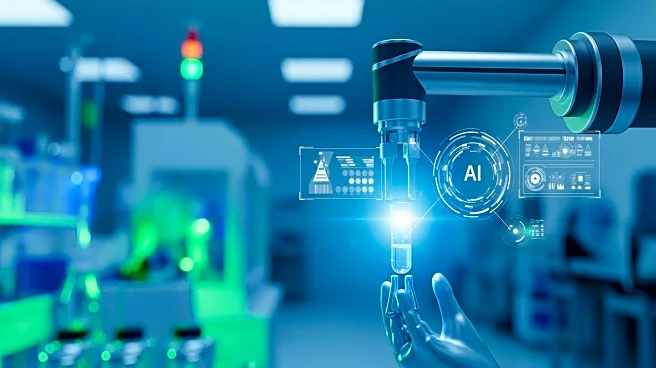
The biopharmaceutical industry is increasingly adopting artificial intelligence (AI) to improve manufacturing processes, according to the International Federation of Pharmaceutical Manufacturers & Associations (IFPMA). AI technologies, including machine
learning and digital twins, are being used for process prediction, control, and quality assurance. These technologies help in deriving actionable insights from historical manufacturing data, enhancing efficiency and reducing errors. Despite the industry's traditionally conservative approach to new technologies, AI is being integrated in a stepwise manner to ensure regulatory compliance and align with quality control frameworks.
Why It's Important?
The integration of AI in biopharmaceutical manufacturing represents a significant shift towards more efficient and precise production methods. This adoption can lead to cost savings, improved product quality, and faster time-to-market for new drugs. For the industry, AI offers a competitive edge by optimizing processes and reducing the likelihood of human error. However, the widespread adoption of AI is contingent upon clear regulatory guidelines that address risk management and ensure the safe use of these technologies. As such, regulatory bodies play a crucial role in facilitating or hindering the pace of AI integration in the sector.
What's Next?
The future of AI in biopharma manufacturing will largely depend on the development of harmonized regulatory frameworks that support its use. Industry stakeholders are advocating for guidelines that clarify risk management and quality assurance processes. As these frameworks evolve, biopharmaceutical companies are likely to increase their investment in AI technologies, further transforming manufacturing practices. The ongoing dialogue between industry leaders and regulators will be pivotal in shaping the landscape of AI adoption in the biopharmaceutical sector.