








What's Happening?
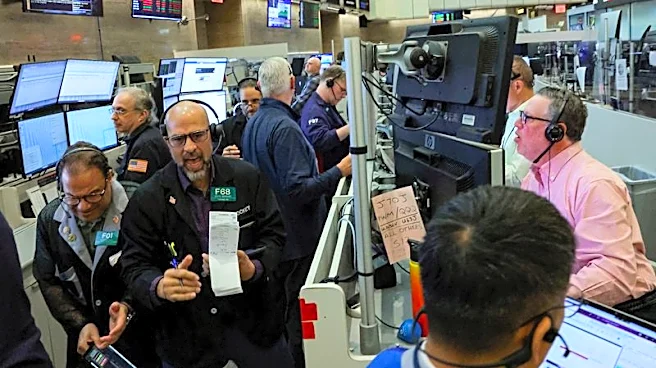
The S&P 500 index reached a new all-time high on May 5, 2026, closing at 7,259.22, marking a 0.81% increase. This rise was part of a broader rally in U.S. stock markets, with the Dow Jones Industrial Average adding 356.35 points to close at 49,298.25,
and the Nasdaq Composite gaining 1.03% to end at 25,326.13. The rally was fueled by a decrease in oil prices, with Brent crude falling 4% to $109.87 per barrel, down from a peak of $115. This decline in oil prices, coupled with strong corporate earnings reports, bolstered investor confidence. Companies like DuPont and Pinterest reported better-than-expected profits, contributing to the positive market sentiment.
Why It's Important?
The record-setting performance of the S&P 500 highlights the resilience of the U.S. stock market despite ongoing geopolitical tensions, particularly the conflict involving Iran. The easing of oil prices is significant as it alleviates some inflationary pressures, which have been a concern for both consumers and businesses. Strong corporate earnings indicate robust economic activity and suggest that companies are effectively navigating challenges such as increased competition and logistical disruptions. This performance could influence investor strategies and economic forecasts, potentially leading to increased investment in U.S. equities.
What's Next?
Looking ahead, the market will likely continue to monitor geopolitical developments, particularly in the Middle East, as well as corporate earnings reports. The U.S. military's efforts to secure the Strait of Hormuz could impact oil prices and, consequently, market dynamics. Additionally, investors will be watching for any changes in monetary policy, especially in response to inflationary trends. The ongoing resilience of the stock market may encourage further investment, but potential risks remain, including geopolitical tensions and economic policy shifts.