


What's Happening?
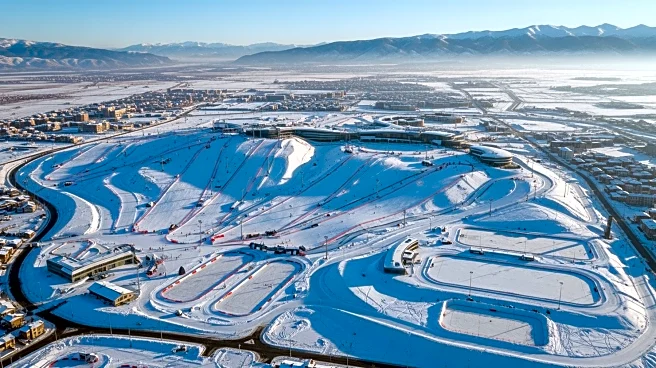
The 2026 Milan Cortina Winter Olympics is notable for its unprecedented geographic spread, with events taking place across an 8,500-square mile area in northern Italy. This dispersion marks the most extensive layout in Winter Olympics history, diverging from the traditional model of city and mountain clusters. The wide distribution aims to avoid large public investments in underutilized venues post-Games and to spread economic benefits across the region. However, this setup has received mixed reviews. While some appreciate the opportunity to explore more of Italy, others find the distances between events challenging. For instance, Thierry Montiller, head of Haiti's ski federation, faces long drives between events, and U.S. snowboarder Red Gerard
noted the difficulty in experiencing the full Olympic atmosphere due to the spread-out nature of the venues.
Why It's Important?
The expansive layout of the Milan Cortina Olympics represents a shift in how the Winter Games are organized, potentially setting a precedent for future events. This model could influence how host cities and countries plan and execute large-scale sporting events, balancing economic benefits with logistical challenges. The spread-out nature allows for a broader distribution of tourism and economic impact, which can be beneficial for regions suffering from overtourism. However, it also poses challenges for athletes, fans, and organizers in terms of travel and logistics. The success or failure of this model could impact future Olympic bids and the International Olympic Committee's approach to selecting host cities.
What's Next?
Looking ahead, the International Olympic Committee appears to be embracing this dispersed model for future Winter Games. The 2030 Winter Olympics will feature events spread across the Alps and other locations, while the 2034 Games will be held in Utah, with a similar approach. This trend suggests a move towards more regionally distributed events, which could become the norm. Stakeholders, including athletes, fans, and local economies, will need to adapt to these changes, potentially influencing travel, accommodation, and event planning strategies. The long-term impact on the Olympic experience and its economic implications will be closely monitored.
Beyond the Headlines
The shift to a more dispersed Olympic model raises questions about the cultural and emotional aspects of the Games. Traditionally, the Olympics have had a central hub that fosters a sense of community and shared experience among athletes and fans. The new model challenges this by spreading events across vast areas, potentially diluting the communal atmosphere. However, it also offers a chance to redefine what the Olympic experience means, focusing on regional engagement and sustainability. This approach could lead to a more inclusive and diverse representation of host regions, but it may also require a reevaluation of how the Games are marketed and experienced globally.