






What's Happening?
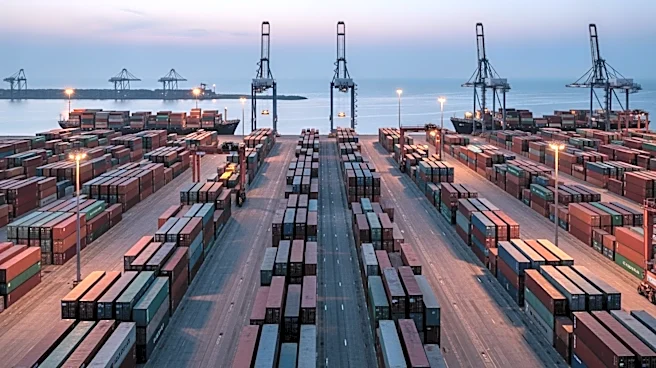
The ongoing conflict involving the U.S. and Iran has led to a significant increase in shipping costs from Asia to the United States. Since the conflict began, the cost of shipping a 40-foot container has nearly doubled, driven by rising fuel prices and increased
demand from importers. The situation is exacerbated by the closure of the Strait of Hormuz, a critical passage for global oil supply, which has led to a spike in bunker fuel prices. This has resulted in higher freight rates, contributing to inflationary pressures in the U.S. economy. The conflict has also led to disruptions in fuel supplies, affecting both shipping and manufacturing sectors.
Why It's Important?
The surge in shipping costs has significant implications for the U.S. economy, particularly in terms of inflation and supply chain stability. Higher freight rates can lead to increased prices for consumer goods, affecting purchasing power and economic growth. The conflict underscores the vulnerability of global trade routes to geopolitical tensions and highlights the need for diversified supply chains. Additionally, the situation poses challenges for the U.S. administration in managing energy policy and international relations, as resolving the conflict could stabilize fuel prices and trade flows.
What's Next?
If the Strait of Hormuz remains closed or partially usable, further disruptions in fuel supply and shipping routes are expected. This could lead to continued increases in shipping costs and further strain on global supply chains. The U.S. administration may need to engage in diplomatic efforts to resolve the conflict and restore stability to the region. Businesses may also need to explore alternative supply routes and strategies to mitigate the impact of rising costs. The situation could prompt a reevaluation of energy policies and trade agreements to enhance resilience against geopolitical risks.