





What's Happening?
Nuclera has introduced a new nanodisc panel designed to streamline the production of G-protein coupled receptors (GPCRs), a critical component in drug discovery and pharmacology. This innovation builds on Nuclera's eProtein Discovery™ membrane protein workflow
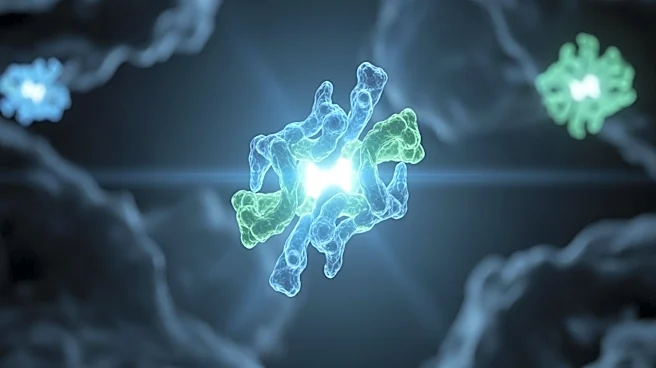
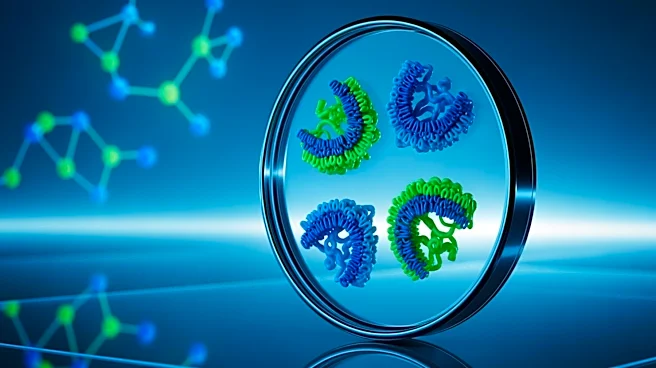
capabilities, allowing researchers to produce active GPCRs within 48 hours. The nanodisc panel includes a GPCR screen kit and scale-up reagents, featuring eight nanodisc combinations with two membrane scaffold proteins and four lipid compositions. This setup aims to minimize variability and enhance the yield of functional GPCRs, which are notoriously difficult to produce in stable, active forms. The traditional methods using detergent micelles often result in non-native protein conformations, whereas nanodiscs provide a more native-like environment, preserving the structural integrity and functionality of the proteins.
Why It's Important?
The launch of Nuclera's nanodisc panel is significant as it addresses a major bottleneck in the field of pharmacology and drug discovery. GPCRs are targets for approximately one-third of all FDA-approved drugs, yet producing them in a functional form has been challenging. By enabling rapid and cost-effective production of these proteins, Nuclera's technology could accelerate drug discovery processes, potentially leading to faster development of new therapeutics. This advancement not only benefits researchers by providing a more reliable method for protein production but also holds promise for the pharmaceutical industry in terms of reducing time and costs associated with drug development.
What's Next?
With the introduction of the nanodisc panel, researchers and pharmaceutical companies are likely to explore its applications in various drug discovery projects. The ability to produce active GPCRs quickly and efficiently could lead to new collaborations and research initiatives aimed at developing novel therapeutics. As the technology gains traction, it may also prompt further innovations in membrane protein research, potentially expanding its use beyond GPCRs to other challenging protein targets. Stakeholders in the pharmaceutical industry will be closely monitoring the outcomes of studies utilizing this technology to assess its impact on drug development pipelines.