


What's Happening?
The Dow Jones Industrial Average closed the week at 46,504.67, experiencing fluctuations due to geopolitical tensions and rising oil prices linked to the ongoing Iran war. The index saw a decline from its previous close, with significant intraday volatility.
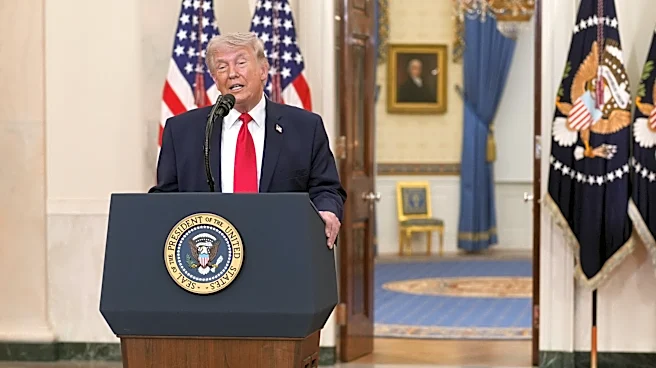
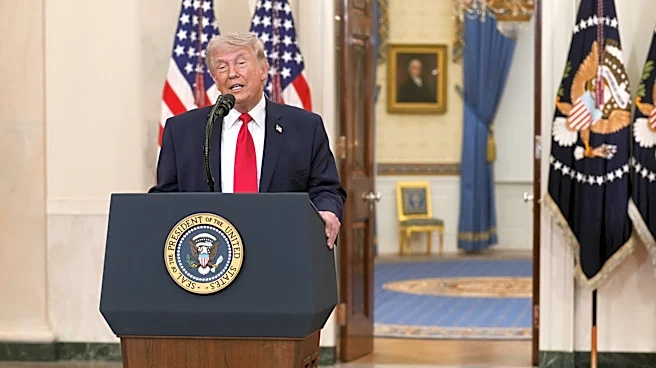
Oil prices surged as President Trump indicated the conflict with Iran could continue, affecting industries reliant on Middle Eastern oil. The Dow's performance was further impacted by concerns over global trade disruptions, particularly through the Strait of Hormuz. The index's heavy exposure to industrial and energy-sensitive stocks contributed to its underperformance compared to other major indexes.
Why It's Important?
The Dow's performance is a key indicator of investor sentiment and economic health. The recent decline reflects concerns over geopolitical instability and its impact on global markets. Rising oil prices have heightened inflation fears, affecting sectors like transportation and manufacturing. The Dow's fluctuations highlight the vulnerability of the U.S. economy to international events and the interconnectedness of global trade. President Trump's focus on the Dow as a measure of economic success underscores the political implications of market performance, with potential consequences for policy decisions and public perception.
What's Next?
As geopolitical tensions persist, the Dow may continue to experience volatility. Investors will closely monitor developments in the Iran conflict and its impact on oil prices and global trade. The potential for further disruptions in the Strait of Hormuz could exacerbate market instability. Policymakers may need to address these challenges through strategic economic measures to stabilize markets and support affected industries. The ongoing situation underscores the importance of balancing domestic economic priorities with international relations to ensure long-term economic resilience.