

What's Happening?
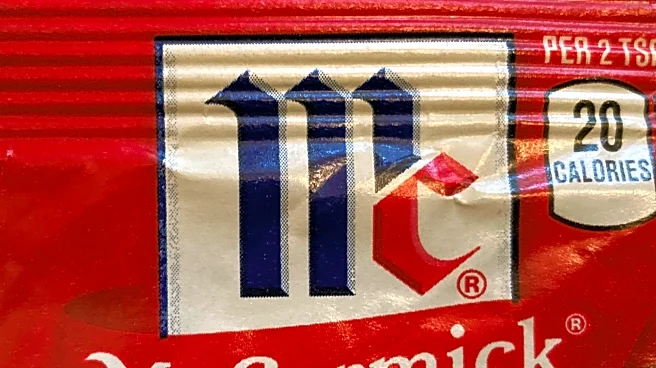
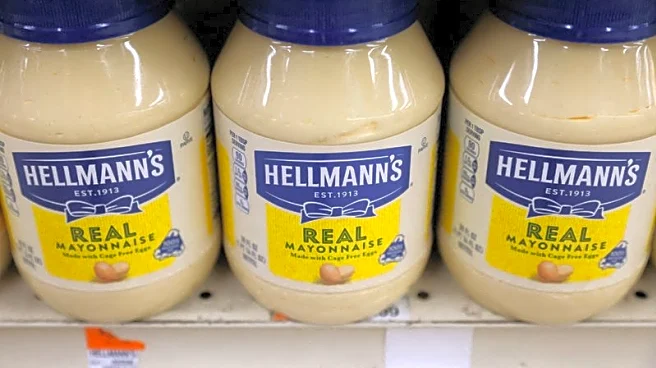
McCormick, a leading spice and flavorings company, announced a merger with Unilever's food division, which includes well-known brands such as Hellmann's and Knorr. This strategic move comes as companies in the packaged food sector face challenges from
inflation and shifting consumer preferences. The merger will result in Unilever and its shareholders owning 65% of the new entity, while McCormick shareholders will hold 35%. The combined company is expected to generate $20 billion in revenue for the 2025 fiscal year. The merger aims to enhance McCormick's access to high-growth regions like Latin America and Asia, while expanding Unilever's presence in North America. The companies anticipate $600 million in annual cost savings and plan to close the transaction by mid-2027, pending shareholder and regulatory approval.
Why It's Important?
This merger is significant as it represents a major consolidation in the food industry, potentially reshaping market dynamics. For McCormick, the merger offers an opportunity to diversify its product offerings and strengthen its position in global markets. Unilever, on the other hand, continues its strategic shift towards high-growth categories, moving away from food to focus more on beauty and wellness. The merger could lead to increased competition in the food service sector, as the combined entity leverages its expanded product portfolio. Stakeholders, including shareholders and consumers, may experience changes in product availability and pricing as the companies integrate their operations.
What's Next?
The merger is subject to approval from both shareholders and regulatory bodies, with a target completion date by mid-2027. As the companies work towards integration, they will likely focus on aligning their operations and realizing the projected cost savings. Industry observers will be watching for potential regulatory challenges, especially given the size and scope of the merger. Additionally, competitors in the food industry may respond with strategic moves of their own to maintain market share.