





What's Happening?
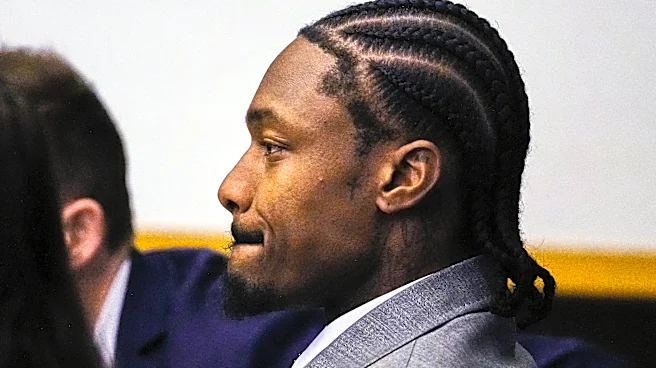
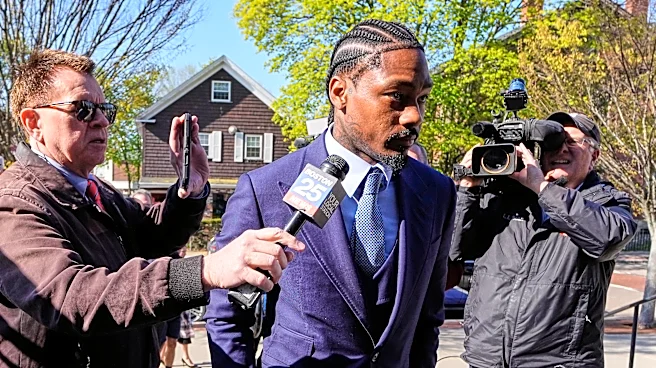
In Dedham, Massachusetts, a jury has acquitted NFL player Stefon Diggs of felony strangulation and misdemeanor assault and battery charges. The charges stemmed from an alleged altercation with his personal chef, Jamila Adams, in December 2025. Adams claimed
that a dispute over money escalated into a physical attack, during which Diggs allegedly choked her. However, Diggs denied the allegations, suggesting that Adams fabricated the incident for financial gain. During the trial, Adams faced scrutiny over her testimony, particularly regarding deleted messages and her actions following the alleged incident. Diggs' defense presented witnesses who testified that they did not observe any altercation, and Adams did not appear injured or upset on the day in question. The jury reached a not guilty verdict after less than 90 minutes of deliberation.
Why It's Important?
The acquittal of Stefon Diggs highlights the challenges faced by public figures, particularly athletes, in legal disputes involving personal relationships. The case underscores the potential for financial motivations to influence allegations against high-profile individuals. Diggs' defense argued that the charges were opportunistic, aiming to leverage his status for financial settlement. This case may impact how similar allegations are perceived in the public and legal arenas, emphasizing the importance of evidence and the potential for reputational damage to athletes. The verdict also raises questions about the scrutiny and pressures faced by professional athletes off the field, as well as the legal strategies employed in defending against such claims.
What's Next?
Following the verdict, Stefon Diggs remains a free agent after being released by the New England Patriots. The outcome of the trial may influence his future career prospects in the NFL, as teams consider both his on-field performance and off-field conduct. The case may also prompt discussions within the sports industry about the support and protection available to athletes facing legal challenges. Additionally, the trial's conclusion could lead to further examination of the dynamics between athletes and their personal staff, particularly regarding financial disputes and personal relationships.