




What's Happening?
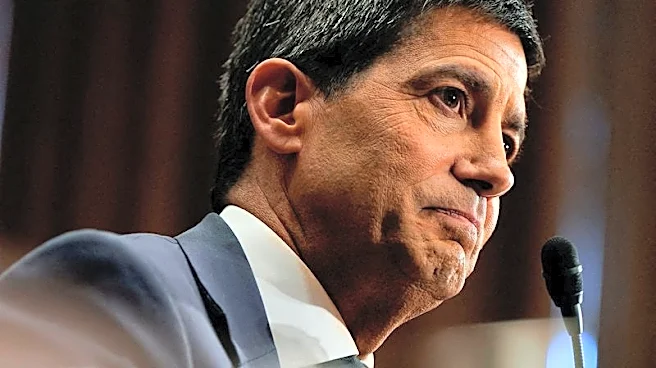
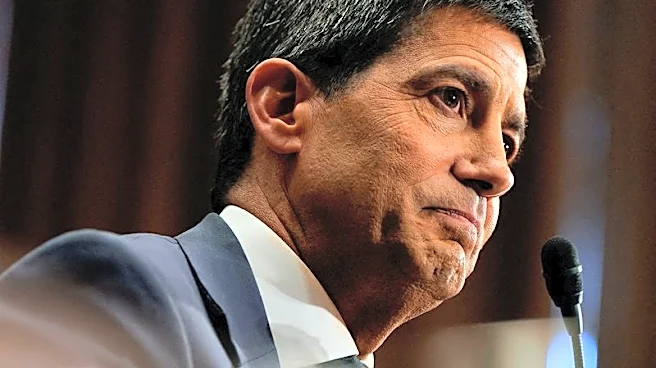
Kevin Warsh is set to take over as the chairman of the Federal Reserve, appointed by President Trump, amidst challenging economic conditions. The University of Michigan Consumer Sentiment Index for May has fallen to a record low of 44.8, indicating a decline
in consumer confidence. Inflation expectations have risen, with the 1-year Consumer Inflation Expectations Index increasing to 4.8% and the 5-year Inflation Index to 3.9%. These developments come as the Iran war has caused oil prices to surge, reigniting inflation concerns. Despite President Trump's preference for lower interest rates, market indicators suggest a high probability of rate hikes by the end of 2026. Warsh's leadership will be crucial in navigating these economic challenges, as he is expected to be officially sworn in soon.
Why It's Important?
The appointment of Kevin Warsh as the Federal Reserve chair comes at a critical time for the U.S. economy, which is grappling with stagflationary pressures. Rising inflation and low consumer confidence could impact economic growth and stability. Warsh's approach to monetary policy will be closely watched, as it could influence interest rates and the broader economic landscape. The potential for rate hikes may affect borrowing costs for businesses and consumers, impacting investment and spending. Additionally, the geopolitical situation, particularly the conflict with Iran, adds complexity to the economic outlook. Warsh's decisions will have significant implications for financial markets and the overall economic trajectory.
What's Next?
As Kevin Warsh assumes his role, the Federal Reserve's policy direction will be under scrutiny. The central bank may need to balance inflation control with economic growth, potentially leading to interest rate adjustments. Warsh's strategies, including potential asset sales to reduce the Fed's balance sheet, could influence market dynamics. Stakeholders, including businesses and policymakers, will be keenly observing the Fed's actions and their impact on the economy. The ongoing geopolitical tensions and their effect on energy prices will also be critical factors in shaping future economic policies.