
What's Happening?
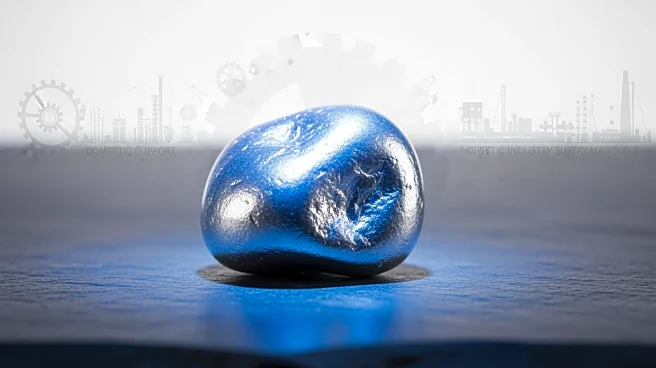
The U.S. Commerce Department has given preliminary support to Sibanye-Stillwater's request for tariffs on Russian palladium imports. This move is aimed at bolstering the long-term viability of U.S. palladium supplies.
Sibanye-Stillwater, a mining company with operations in South Africa and the U.S., initially petitioned for these tariffs in July. The Commerce Department's preliminary investigation found evidence of dumping, with a weighted-average dumping margin of 132.83% for Russian palladium. This finding is part of a broader investigation that will also involve the U.S. International Trade Commission, with a final decision expected by mid-2026. The shift in trade patterns has already been observed, with U.S. imports of palladium from South Africa increasing by 22% and those from Russia decreasing by 14% in 2025.
Why It's Important?
The preliminary support for tariffs on Russian palladium is significant for the U.S. palladium market and domestic producers. By imposing tariffs, the U.S. aims to protect its domestic industry from unfair competition due to dumping practices by Russian producers. This could lead to a more stable supply chain for palladium, which is crucial for the automotive industry as it is used in catalytic converters to reduce vehicle emissions. The decision could also impact global trade dynamics, as Russia is a major palladium producer. The tariffs may lead to increased costs for U.S. consumers and industries reliant on palladium, potentially affecting prices of goods such as automobiles.
What's Next?
The final decision on the tariffs will be made by mid-2026, following further investigations by the U.S. International Trade Commission. If the tariffs are implemented, it could lead to a realignment of global palladium trade, with potential shifts in supply chains and pricing. Stakeholders, including U.S. automotive manufacturers and other industries dependent on palladium, will be closely monitoring the situation. The outcome could also influence U.S.-Russia trade relations and prompt responses from other palladium-producing countries.