





What's Happening?
Anduril Industries, a defense technology start-up, has secured $5 billion in Series H funding, doubling its valuation to $61 billion. This significant financial boost, announced in May 2026, is set to accelerate the development and testing of augmented
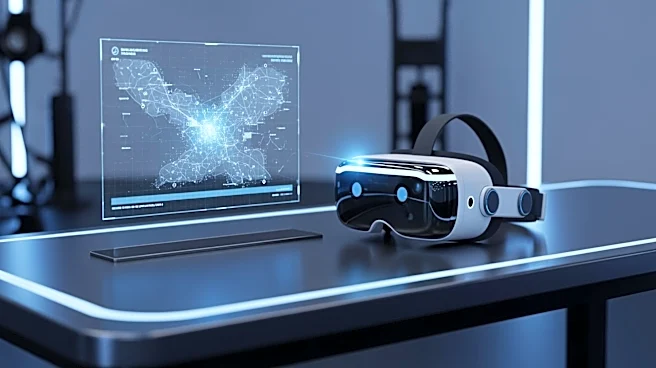
reality (AR) technologies for military applications. The funding will enhance the production and research capabilities of Anduril's EagleEye helmet and the Army's Soldier Born Mission Command (SBMC) prototypes, which incorporate AR overlays, eye-tracking, and AI-driven recommendations. The cash infusion is expected to expedite the transition of these technologies from isolated prototypes to large-scale military programs, potentially reshaping battlefield operations.
Why It's Important?
The $5 billion funding round is pivotal for Anduril as it removes production bottlenecks and allows for rapid iteration of AR technologies. This development is crucial for the U.S. military, which seeks to integrate advanced AR systems into its operations to enhance situational awareness and decision-making on the battlefield. The financial backing also positions Anduril as a key player in the defense sector, potentially influencing procurement timelines and military strategies. However, the rapid deployment of these technologies raises ethical and safety concerns, particularly regarding information overload for soldiers and the implications of AI-driven decision-making in combat scenarios.
What's Next?
With the new funding, Anduril plans to expand its manufacturing capacity and accelerate research and development efforts. The company aims to address technical challenges such as battery life, thermal management, and reliable on-device AI to make AR systems combat-ready by 2028. The Army's procurement process will play a critical role in determining the pace of deployment, as rigorous testing and validation are required to ensure the reliability and safety of these technologies. The success of Anduril's AR systems could lead to broader adoption by allied militaries and increased scrutiny from regulators and oversight bodies regarding the ethical use of AI in military operations.
Beyond the Headlines
The infusion of private capital into military AR technologies highlights a shift towards greater reliance on commercial innovation in defense. This trend may lead to increased collaboration between civilian tech companies and the military, potentially blurring the lines between commercial and defense sectors. The ethical implications of AI-assisted targeting and decision-making in warfare will likely become a focal point for policymakers and advocacy groups, as they seek to establish guidelines and safeguards to prevent misuse. The rapid advancement of AR technologies also raises questions about the future of warfare and the role of human soldiers in increasingly automated battlefields.