



What's Happening?
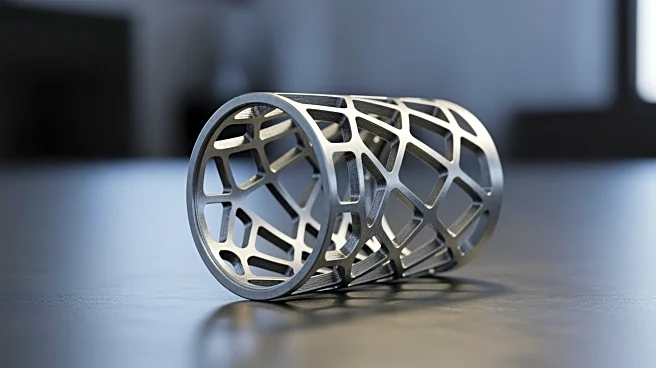
Velo3D, a leading additive manufacturing technology company, has been selected as the first qualified vendor to support the U.S. Army's Ground Vehicle Systems Center (GVSC) in accelerating additive manufacturing solutions. This partnership aims to address critical supply chain challenges affecting ground combat vehicles and other military systems. Velo3D's advanced metal 3D printing technology will be used to produce complex parts and assemblies, helping to relieve current sustainment bottlenecks in the Army's supply chain.
Why It's Important?
The selection of Velo3D as a qualified vendor marks a significant step in the U.S. Army's efforts to modernize its supply chain and enhance its operational capabilities. Additive manufacturing offers the potential to produce
high-quality, mission-critical parts more efficiently and cost-effectively, reducing reliance on traditional manufacturing processes. This development could lead to increased readiness and resilience in the Army's ground vehicle systems, ultimately strengthening national defense capabilities.
What's Next?
As Velo3D and the U.S. Army continue to collaborate, the focus will be on validating the performance and reliability of additively manufactured components. Successful implementation could pave the way for broader adoption of additive manufacturing across the Defense Industrial Base, potentially transforming how military equipment is designed, produced, and maintained. The partnership may also inspire other industrial base partners to explore similar collaborations, further advancing the field of additive manufacturing.
Beyond the Headlines
The integration of additive manufacturing into military supply chains raises important considerations regarding cybersecurity and intellectual property protection. Ensuring the security of digital manufacturing processes and safeguarding sensitive data will be critical to maintaining the integrity of military operations. Additionally, the shift towards additive manufacturing may have broader implications for the defense industry, including changes in workforce requirements and the need for new skills and expertise.