





What's Happening?
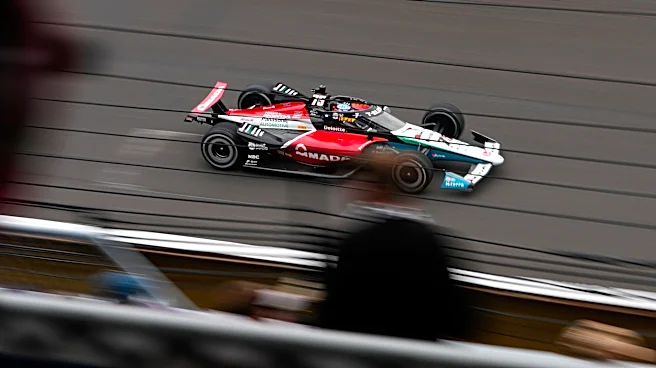
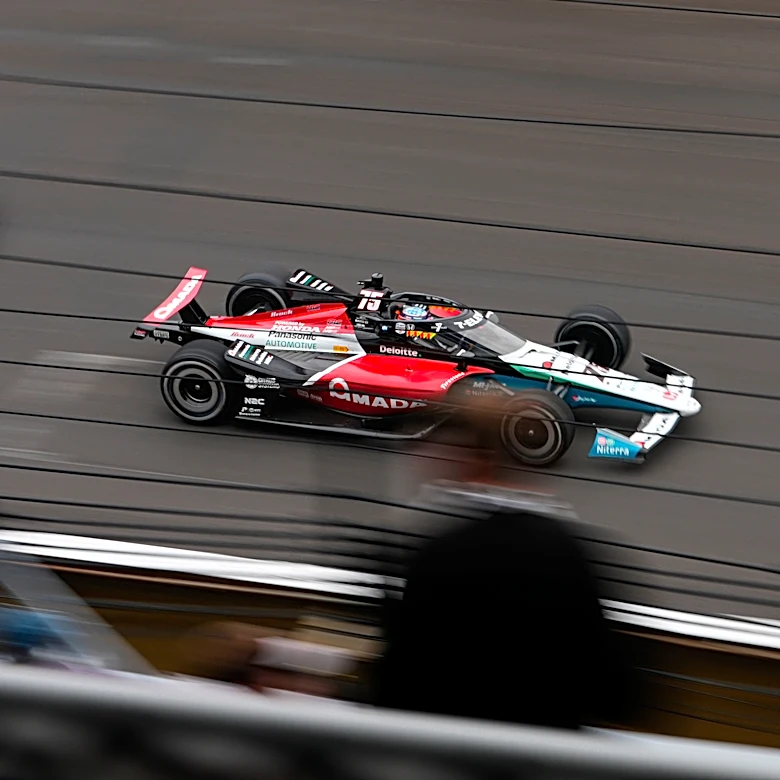
IndyCar and its officiating body have announced changes to their caution procedures following an incident involving driver Alexander Rossi during the Sonsio Grand Prix at the Indianapolis Motor Speedway. Rossi experienced a power failure on the main straightaway,
prompting a local caution instead of a full-course yellow. This decision was criticized by Rossi, who highlighted the delay in declaring a full-course yellow despite the high-speed nature of the track. In response, IndyCar has revised its procedures to ensure that safety is the primary consideration when deciding to escalate from a local to a full-course yellow. The new guidelines will no longer factor in competitive elements such as pit windows and the running order of cars. Instead, the focus will be on driver status, vehicle position, and the readiness of safety personnel. This change comes ahead of the Indianapolis 500, emphasizing the series' commitment to driver and spectator safety.
Why It's Important?
The revision of caution procedures by IndyCar underscores the critical importance of safety in motorsports. By removing competitive considerations from the decision-making process, IndyCar aims to enhance the safety of drivers, crews, and fans. This change is particularly significant as it comes just before the high-profile Indianapolis 500, where safety concerns are paramount due to the race's speed and scale. The decision reflects a broader industry trend towards prioritizing safety over competitive dynamics, potentially influencing other racing series to adopt similar measures. For teams and drivers, this shift may alter race strategies, as the timing of full-course yellows will now be less predictable and solely based on safety criteria.
What's Next?
With the Indianapolis 500 approaching, the implementation of these new procedures will be closely watched by teams, drivers, and fans. The race will serve as a critical test of the revised guidelines, providing an opportunity to assess their effectiveness in real-world conditions. Stakeholders will likely monitor the impact on race dynamics and safety outcomes, potentially leading to further refinements. Additionally, the broader motorsport community may observe these changes as a case study for enhancing safety protocols in other racing series.