



What's Happening?
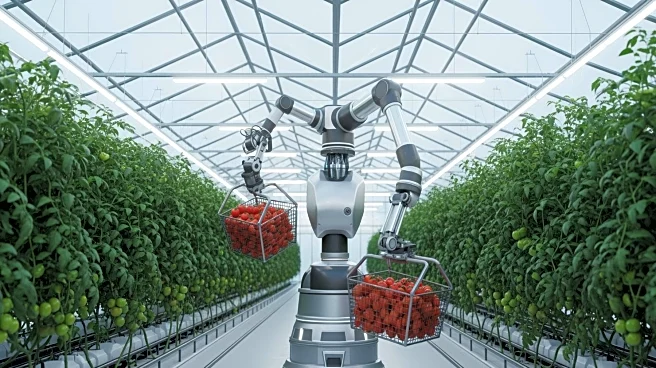
Eternal.ag, a German agritech startup, has introduced its first commercial product, Harvester, a fully autonomous robot designed for tomato greenhouses. This innovation aims to tackle the significant labor shortages affecting the greenhouse industry.
Greenhouses are crucial for maintaining a consistent supply of fresh produce, as they are less susceptible to seasonal changes, climate impacts, and pests compared to traditional farming. However, labor availability in greenhouses has decreased by 30% in Europe since 2010, a trend expected to continue. Eternal.ag's Harvester operates up to 22 hours a day and is part of an AI-powered system that ensures the quality of produce. The system is modular, allowing for future expansions to accommodate broader greenhouse operations. The company has secured €8 million in venture capital to support the development of Harvester and other products, aiming to expand its commercial reach across Europe and diversify into other crop types.
Why It's Important?
The introduction of autonomous robots like Harvester is significant for the agricultural sector, particularly in addressing labor shortages that threaten the stability of food supply chains. By automating labor-intensive tasks, greenhouses can maintain consistent operations, reducing dependency on human labor, which is becoming increasingly scarce. This technological advancement not only promises to enhance productivity but also offers a sustainable solution to the labor crisis in agriculture. The investment in such technology reflects a broader trend towards automation in various industries, potentially leading to more resilient and efficient agricultural practices. Stakeholders in the agricultural sector, including investors and greenhouse operators, stand to benefit from reduced operational uncertainties and increased efficiency.
What's Next?
Eternal.ag plans to expand its commercial deployments across Europe and explore additional crop types for its autonomous systems. The company envisions fully automated greenhouse operations by 2040, eliminating the need for manual labor. As the technology develops, it is likely to attract more investment and interest from other regions facing similar labor challenges. The success of this initiative could encourage further innovation in agricultural automation, potentially leading to widespread adoption of robotic solutions in the industry.