






What's Happening?
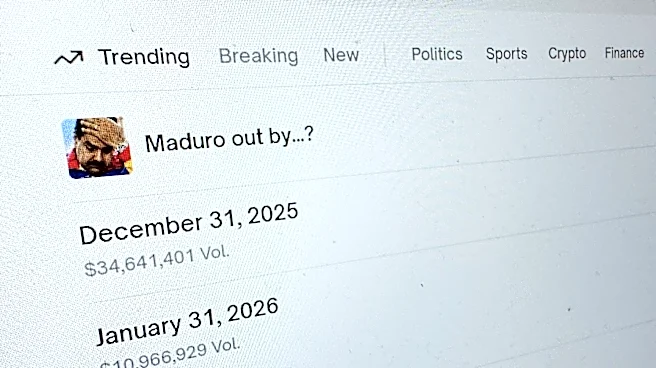
A U.S. special forces master sergeant, Gannon Ken Van Dyke, has been charged with insider trading on prediction markets. Van Dyke allegedly used classified information about a military operation to place bets on Polymarket, a decentralized prediction market platform,
resulting in approximately $400,000 in profits. This marks the first known instance of U.S. authorities charging someone with insider trading in this burgeoning industry. The case highlights a pattern of suspicious trades coinciding with major geopolitical events, raising concerns about the potential for individuals with access to sensitive information to manipulate these markets for personal gain. The arrest follows a broader federal investigation into prediction markets, which have become increasingly popular, allowing users to bet on a wide range of topics, including politics and international conflicts.
Why It's Important?
The arrest of Van Dyke underscores the growing scrutiny of prediction markets, which have become a multibillion-dollar industry. These platforms are seen as providing valuable insights into public opinion and future events, but they also pose significant risks, including the potential for insider trading and gambling addiction. The case raises questions about the adequacy of current regulations and the need for stricter oversight to prevent the misuse of sensitive information. The involvement of high-profile figures, such as President Trump's son, Donald Trump Jr., as an adviser and investor in these markets, adds a layer of complexity to the regulatory landscape. The outcome of this case could set a precedent for how insider trading on prediction markets is prosecuted and regulated in the future.
What's Next?
The legal proceedings against Van Dyke will likely prompt further examination of the regulatory framework governing prediction markets. Lawmakers may consider new legislation to address the unique challenges posed by these platforms, balancing the need for innovation with the protection of national security and public welfare. The case may also lead to increased internal scrutiny within companies and government agencies to prevent similar incidents. As the industry continues to grow, stakeholders, including regulators, platform operators, and users, will need to navigate the evolving legal and ethical landscape of prediction markets.