


What's Happening?
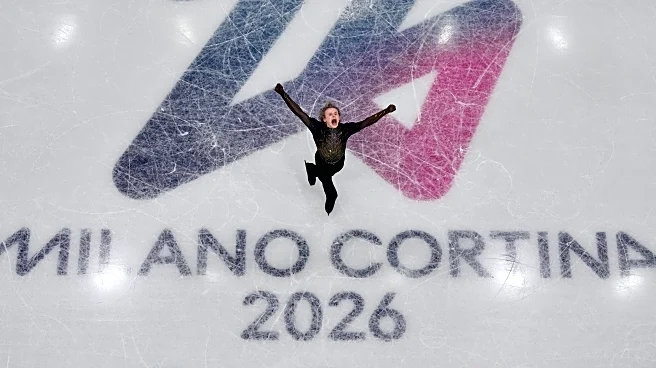
Ilia Malinin, a 21-year-old American figure skater, made history at the Milano Cortina 2026 Olympic Winter Games by performing the first legal Olympic backflip since 1976. This remarkable feat occurred during the men's singles short program, where Malinin's performance electrified the audience, including tennis star Novak Djokovic. The backflip, once banned for safety reasons, was reintroduced by the International Skating Union in 2024. Malinin, known as the 'Quad God' for his aerial prowess, has previously set records with his quadruple jumps. His backflip, while not contributing to his technical score, significantly enhanced his artistic impression, drawing immense crowd appreciation.
Why It's Important?
Malinin's successful execution of the backflip marks a significant
moment in figure skating, showcasing the evolution of the sport's technical and artistic boundaries. The reintroduction of the backflip into Olympic competition highlights a shift towards embracing more spectacular elements, potentially influencing future judging criteria and athlete training. This development could inspire skaters to incorporate more daring moves, enhancing the sport's appeal to audiences. For the U.S., Malinin's performance underscores the country's competitive edge in figure skating, potentially boosting interest and investment in the sport domestically.
What's Next?
Malinin is set to compete in the men's free program, where he is a favorite for the gold medal. His decision to prioritize safety over attempting the quadruple Axel on Olympic ice reflects a cautious approach, balancing showmanship with athlete well-being. The outcome of his performance could influence future Olympic strategies and the integration of high-risk maneuvers in competitive routines. Stakeholders, including coaches and sports organizations, may reassess training methodologies to accommodate the evolving landscape of figure skating.
Beyond the Headlines
The reintroduction of the backflip and similar maneuvers could spark debates on safety standards and the ethical implications of pushing athletes towards more dangerous feats. As the sport evolves, there may be increased scrutiny on the balance between entertainment value and athlete health. This development could also lead to broader discussions on the role of innovation in sports and how governing bodies adapt to changing dynamics while ensuring participant safety.